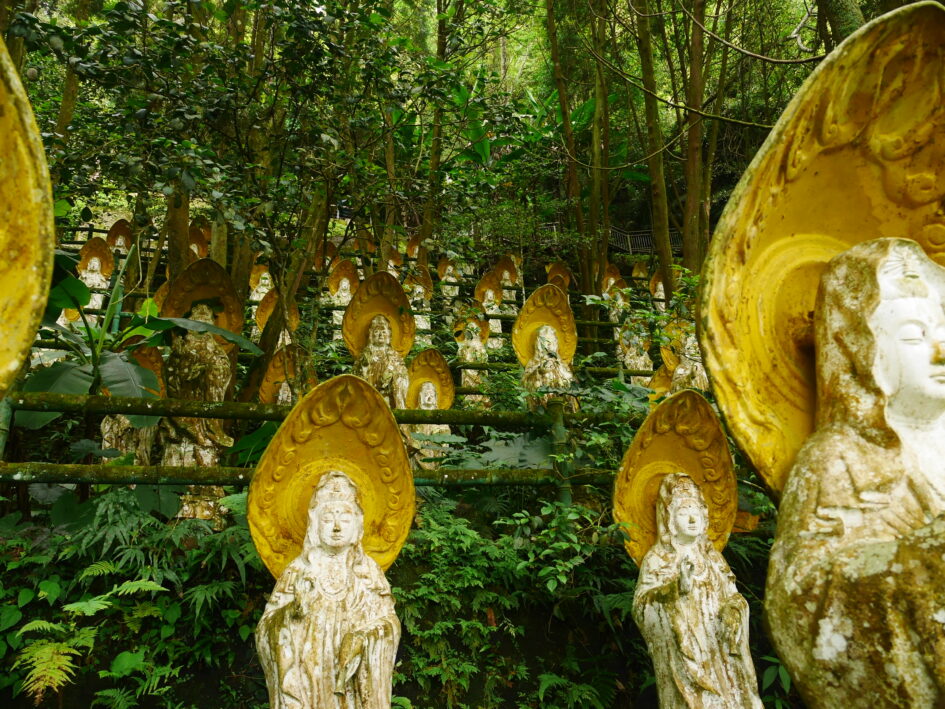
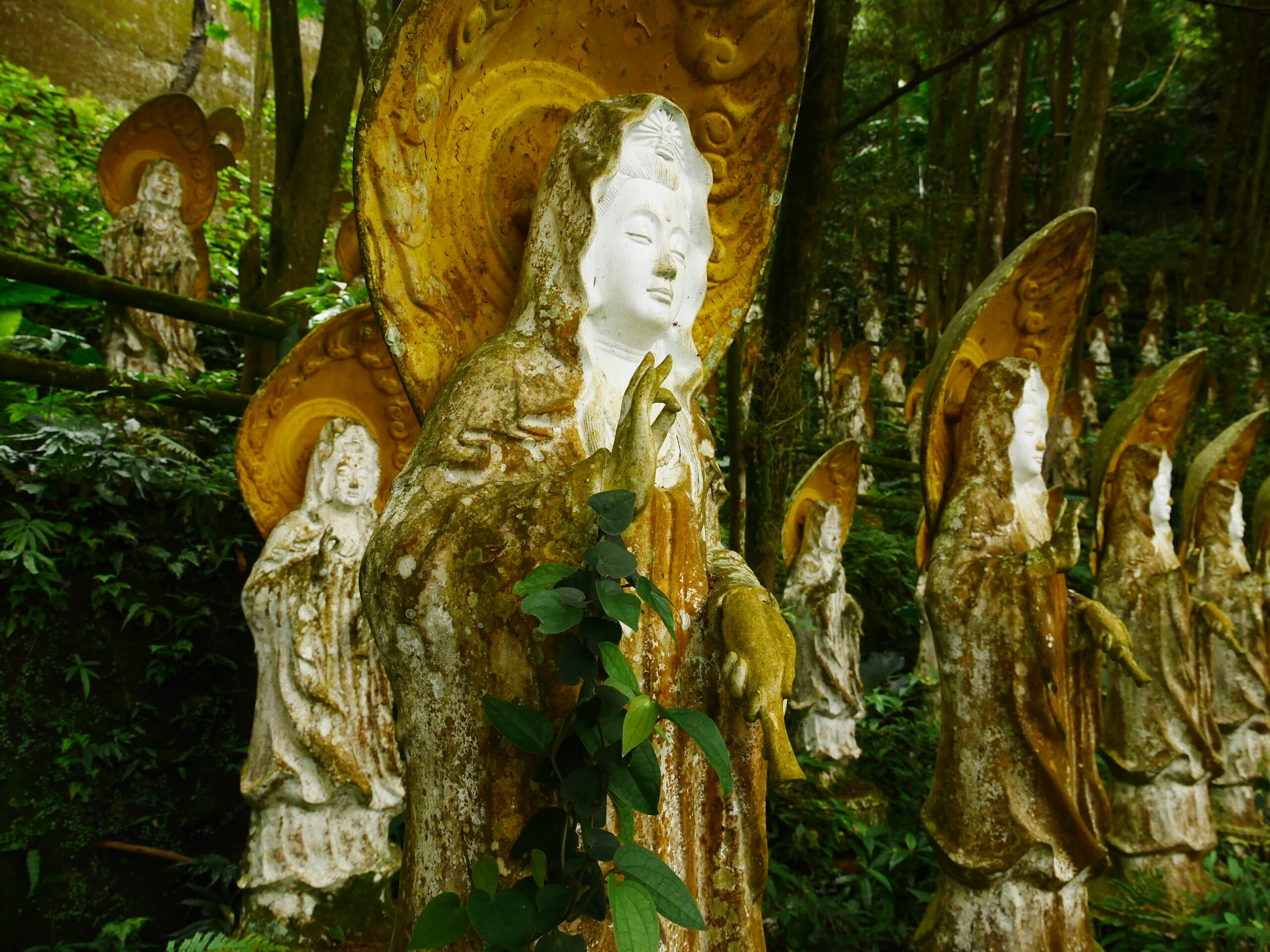
Some time ago I was hiking along the Lion Head Mountain Historic Trail when I noticed an odd shape in the jungle a couple of meters off the side of the trail. Feeling curious I stepped off the trail to investigate and found that it was a statue…actually not just one, but hundreds of statues lined up neatly next to each other in terraced rows. Once upon a time they must have been pristine white, but time and the elements have taken their toll; they’re covered in mold and grime, several of them have pieces missing, and the jungle is encroaching on the platforms where they stand, vines wrapping around their legs. What’s strange (or at least stranger than a bunch of statues in the forest) is that they are all identical depictions of the godless Guanyin; it’s as if someone copy-pasted her statue about 200 times. The only reason it’s possible to tell them apart is that they have deteriorated in slightly different ways.
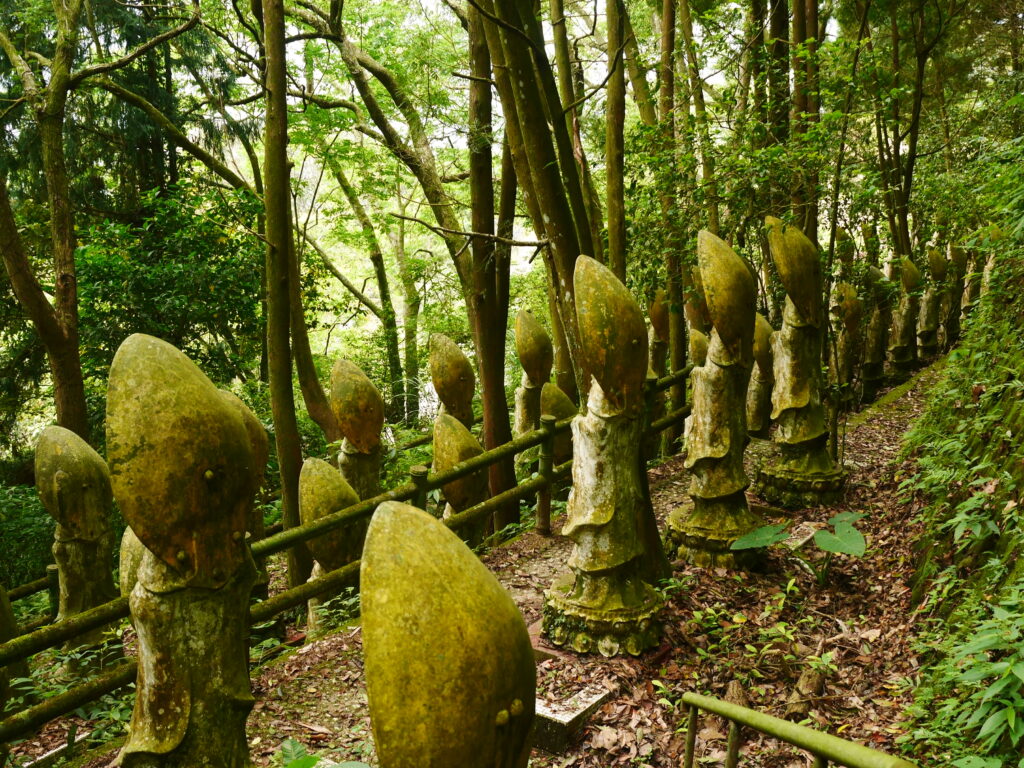
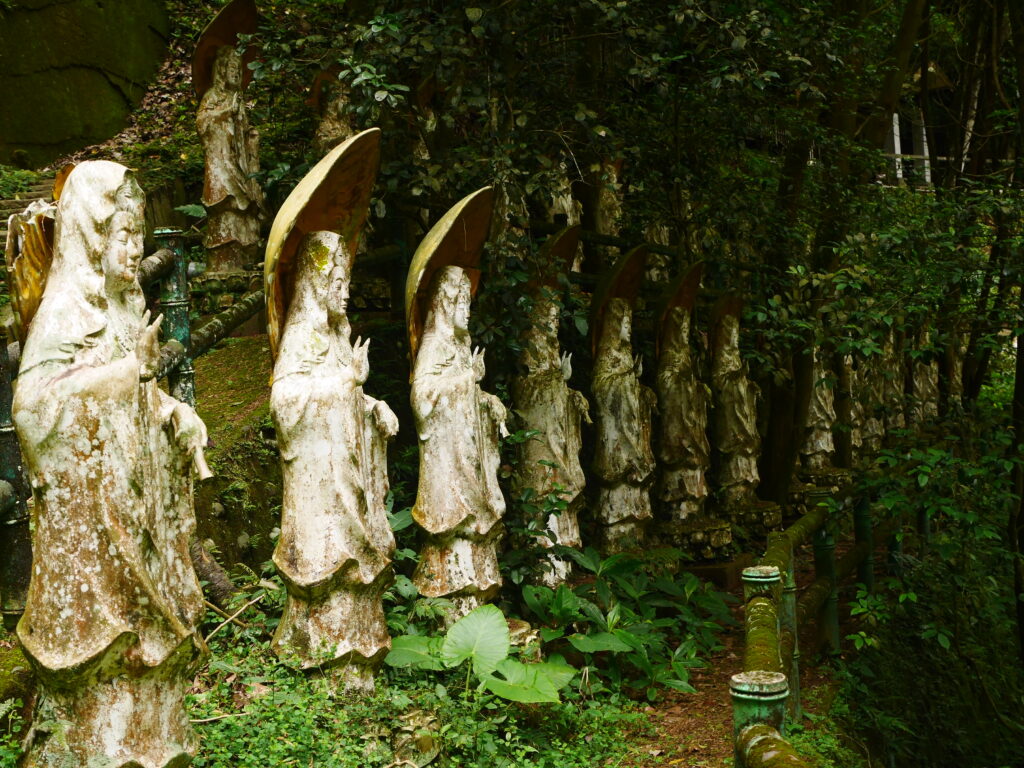
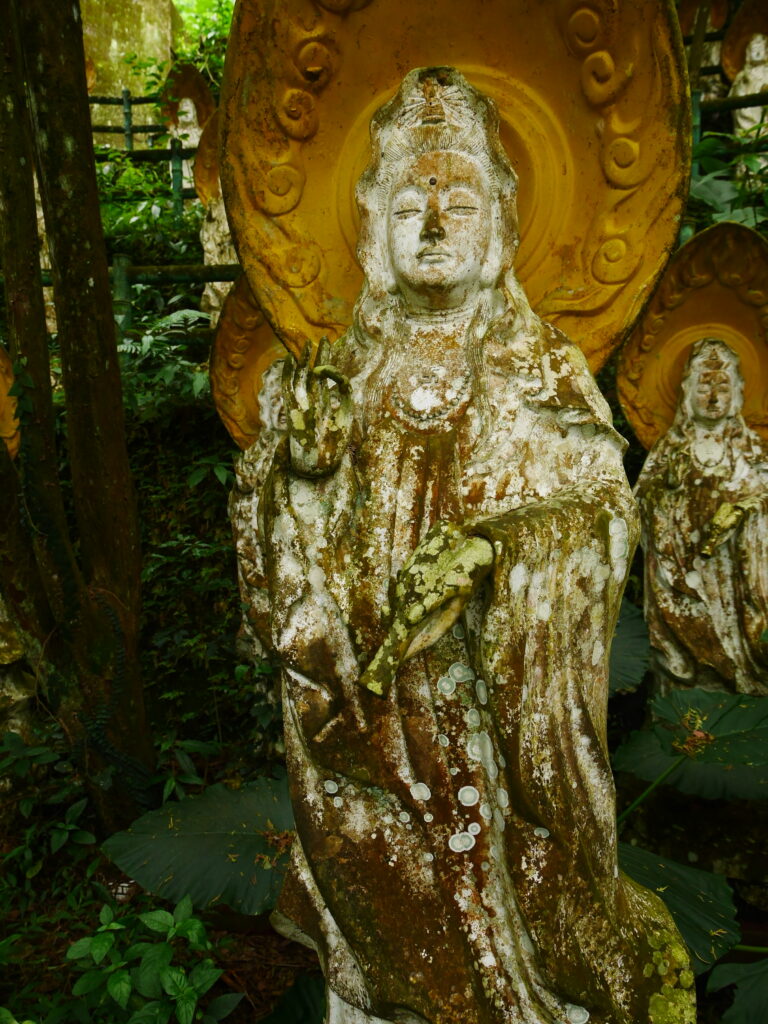
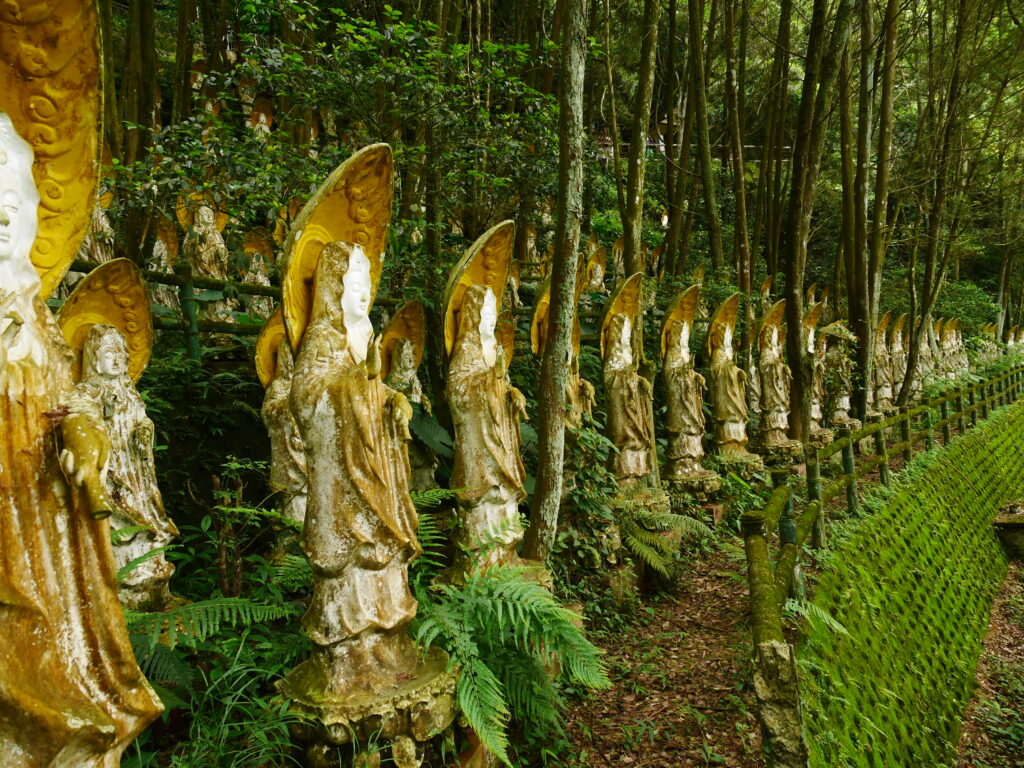
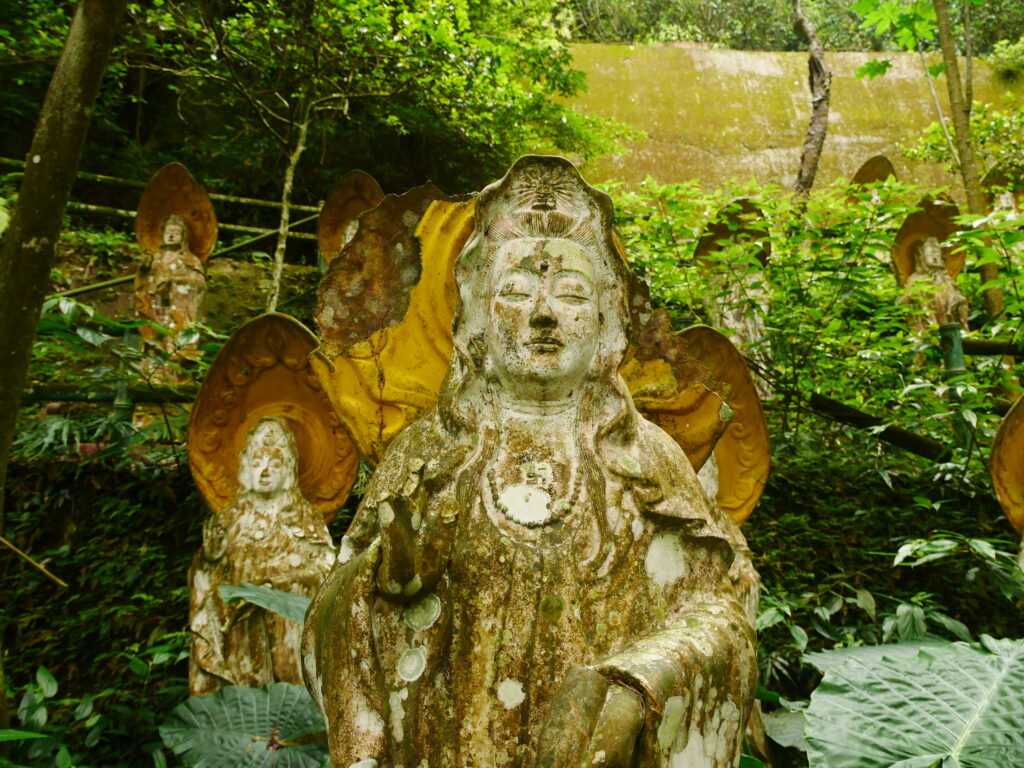
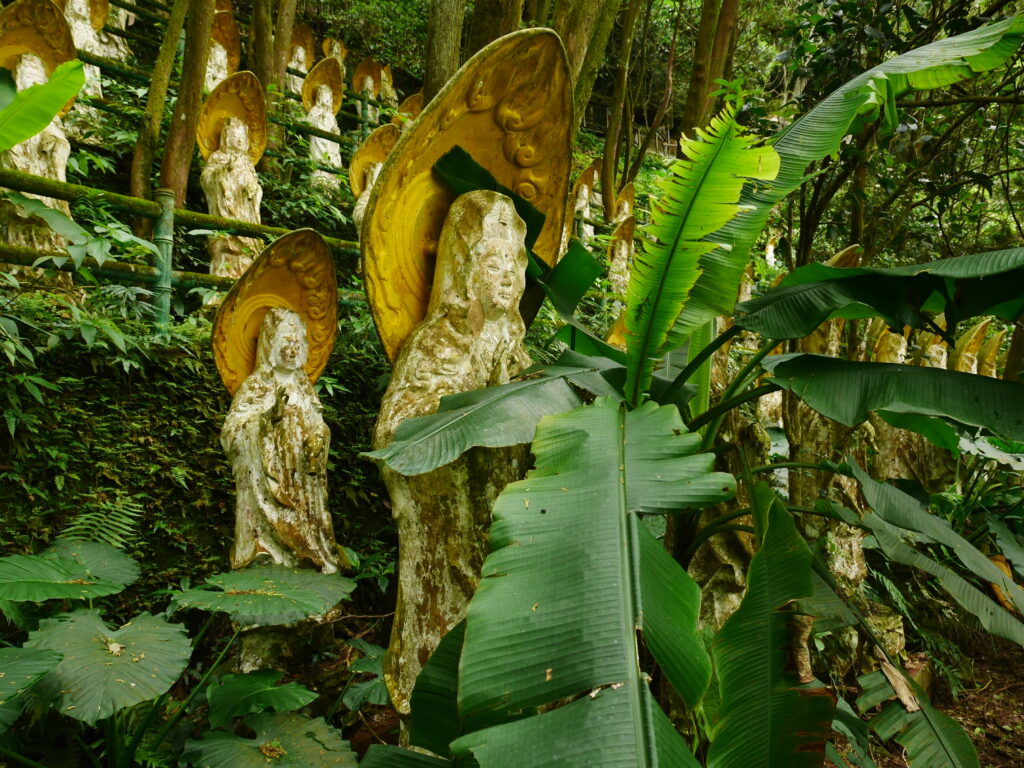
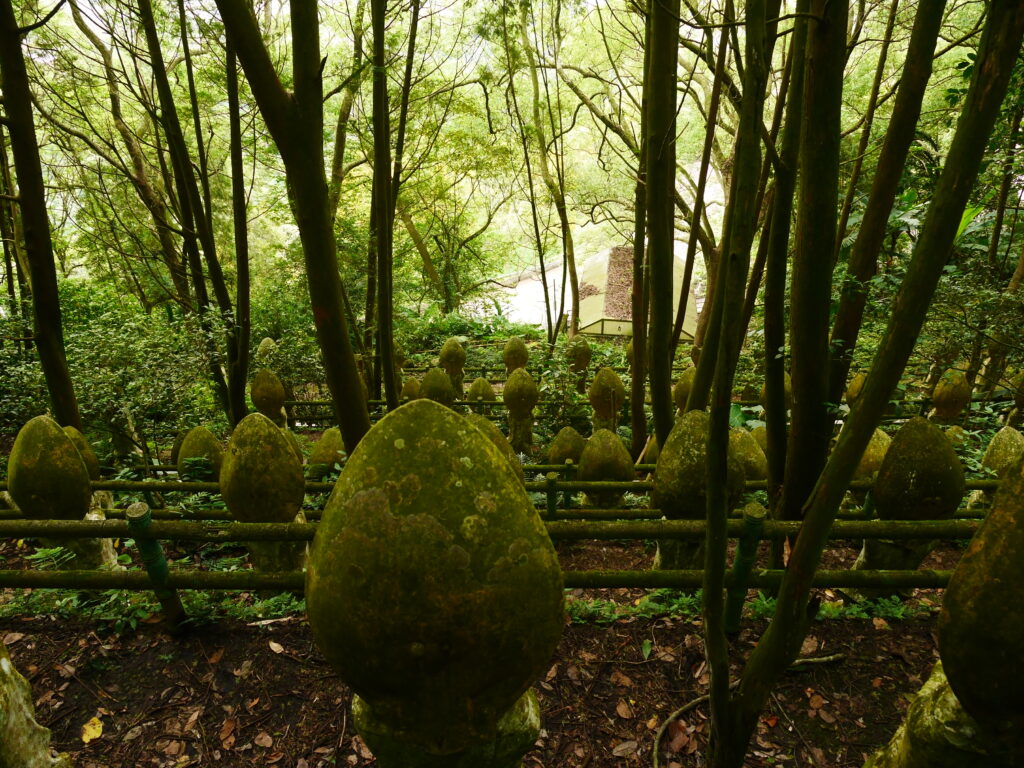
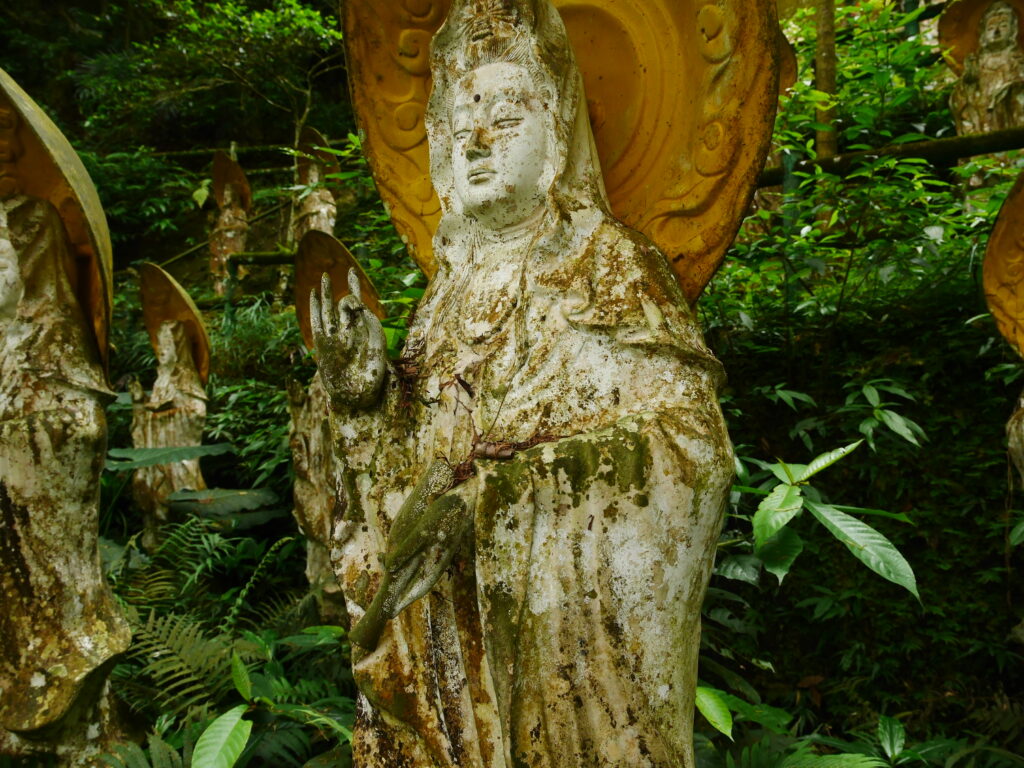
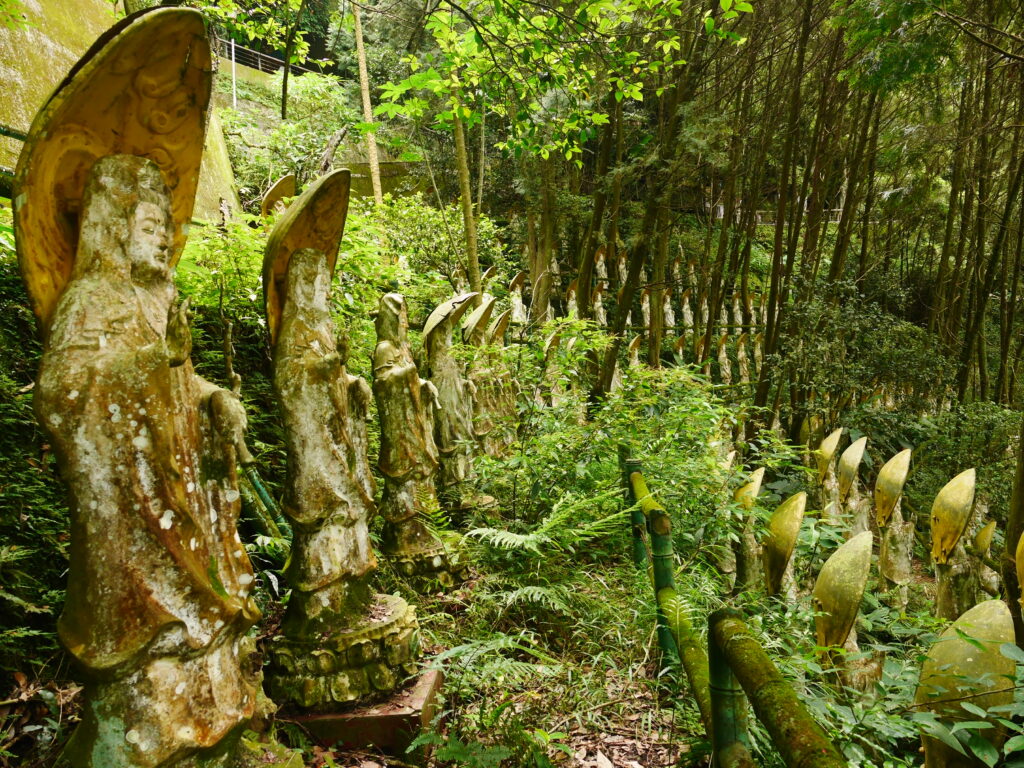
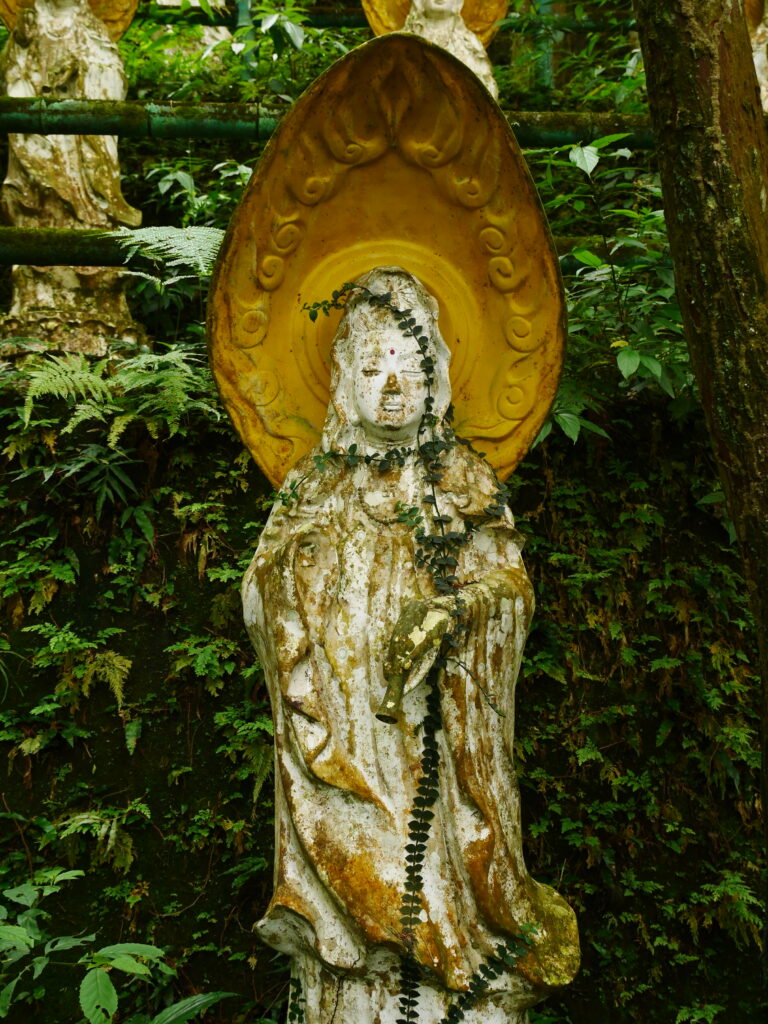
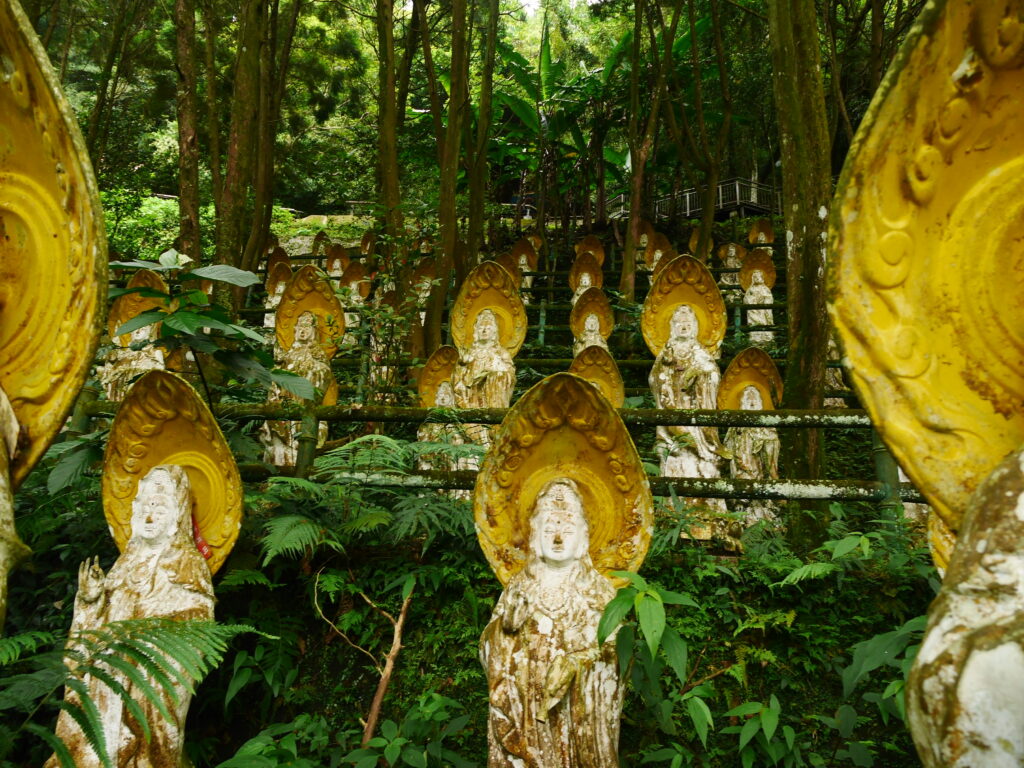
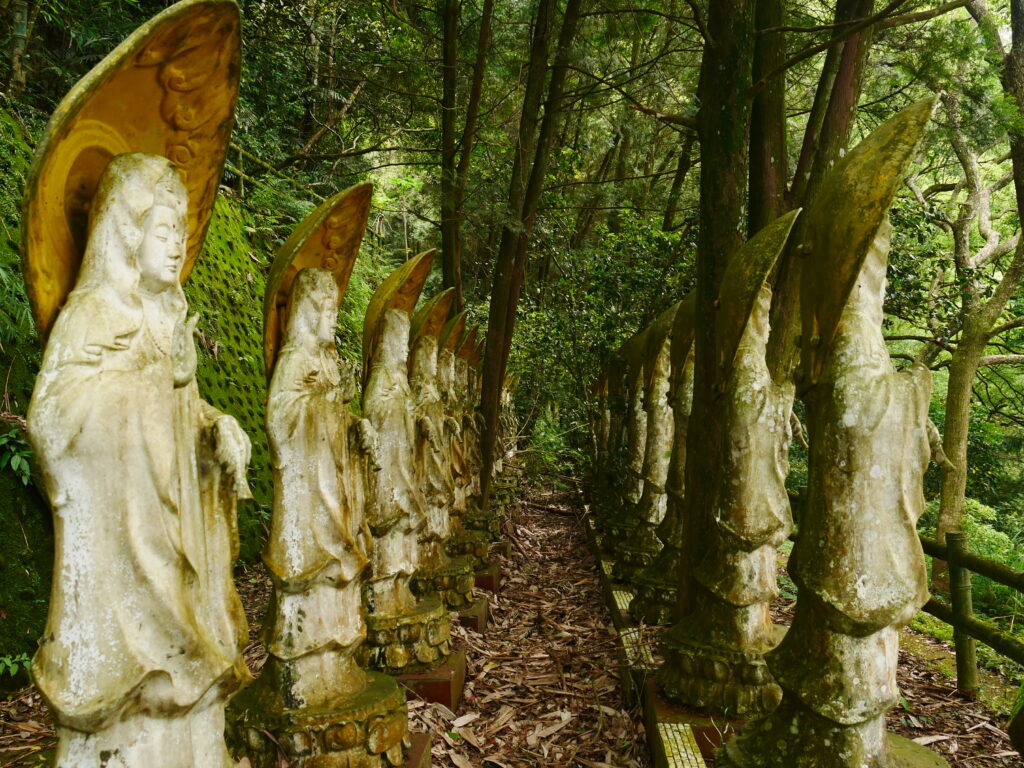
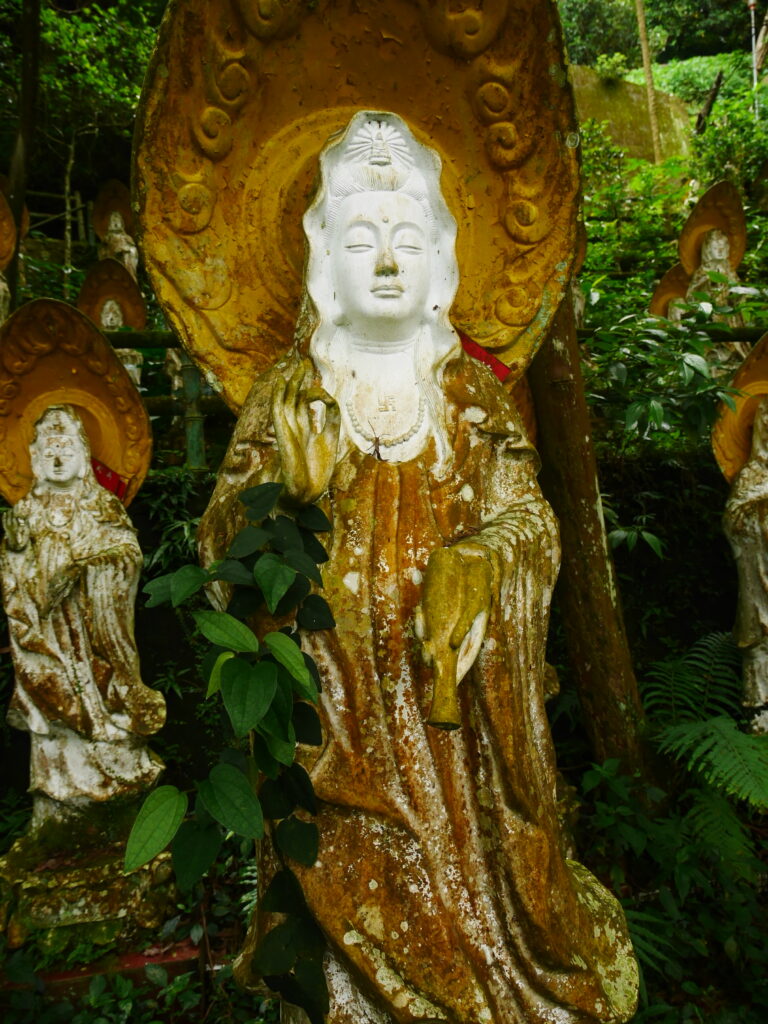
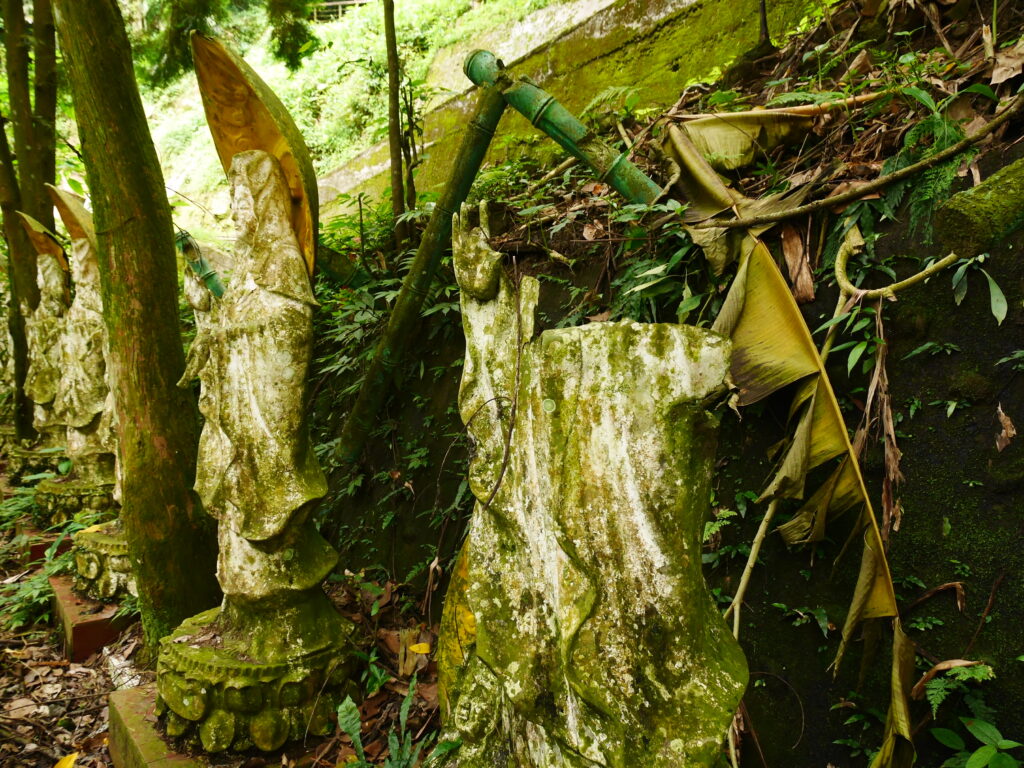
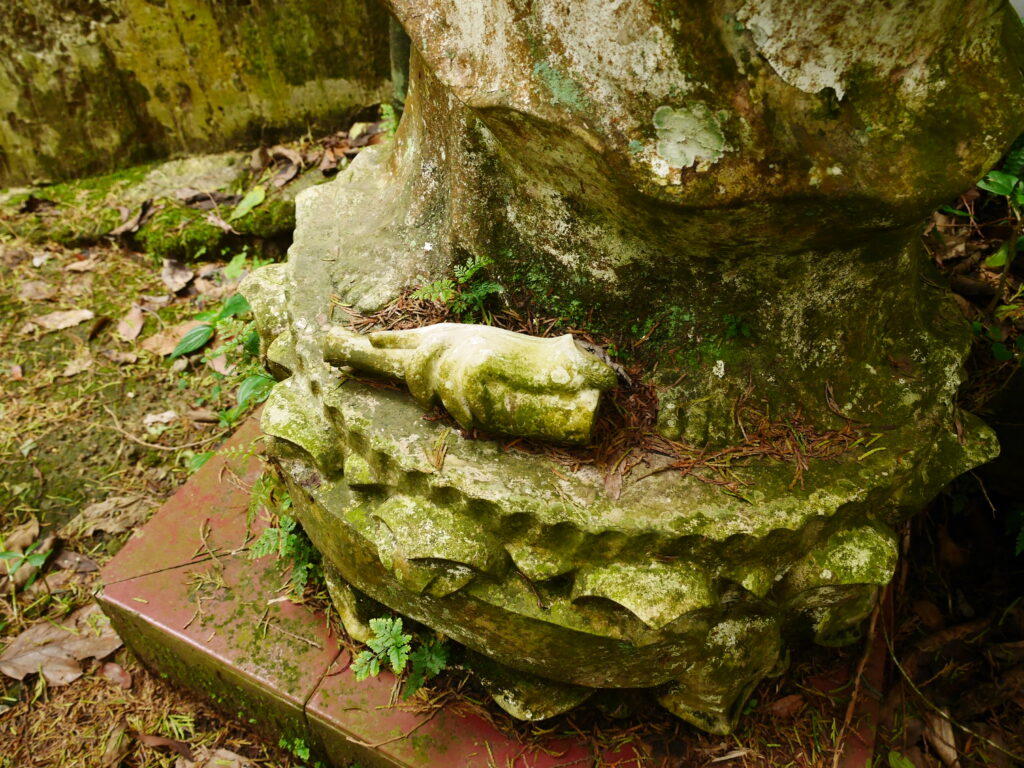
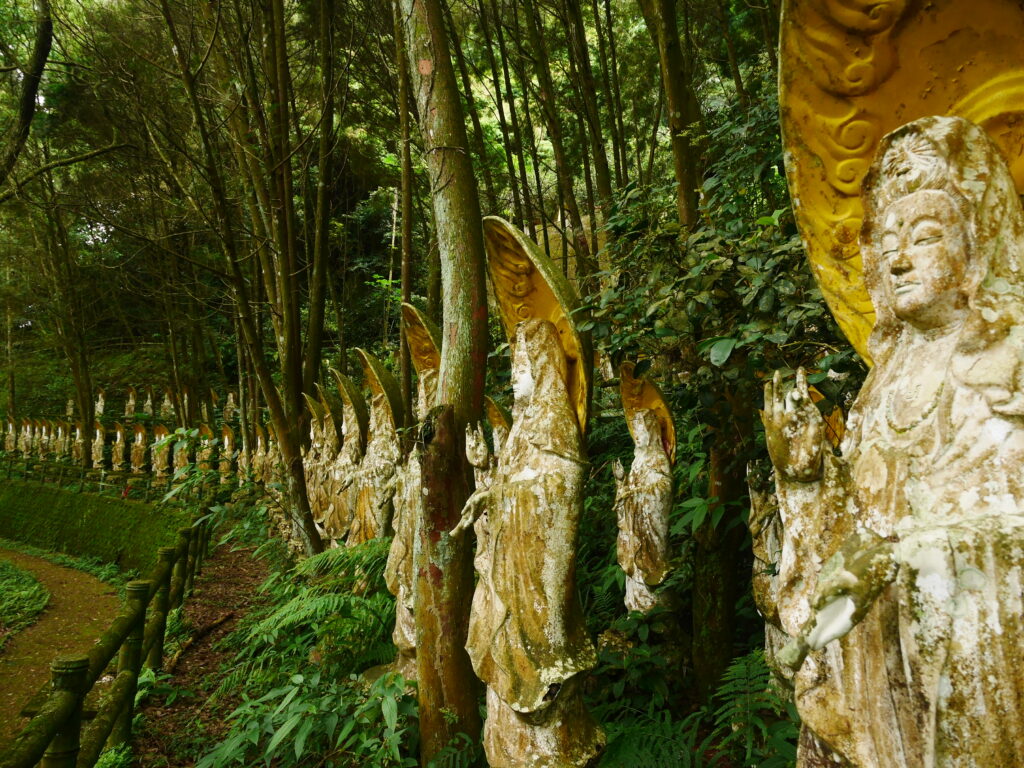
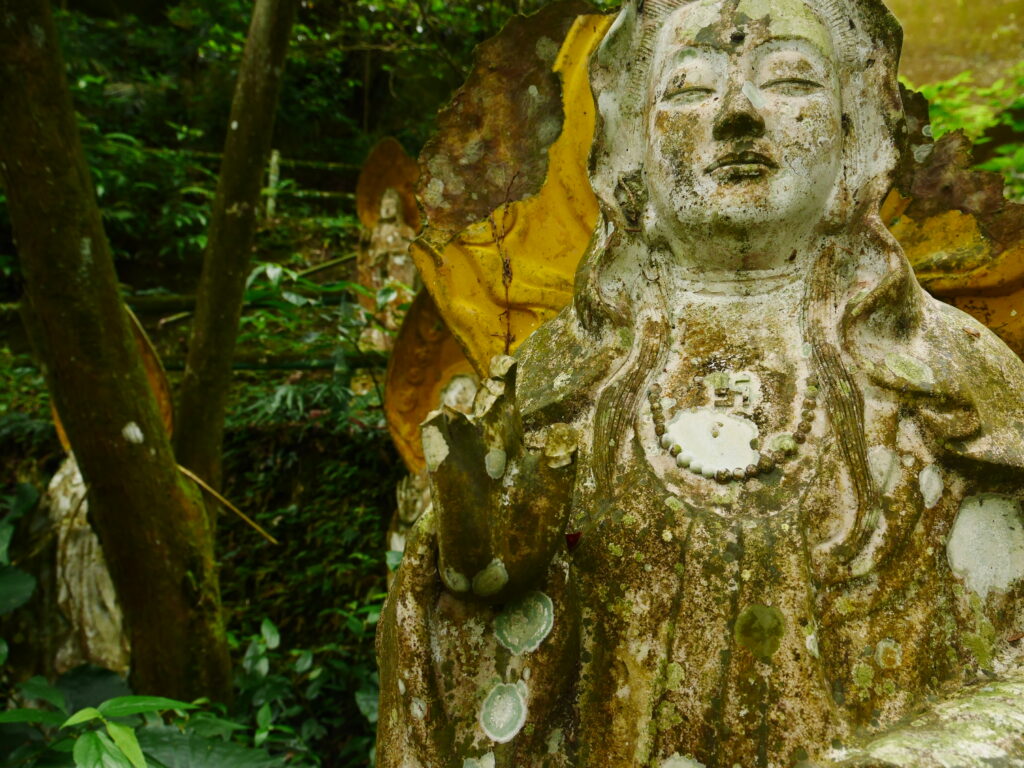
A whole bunch of shots of the statues
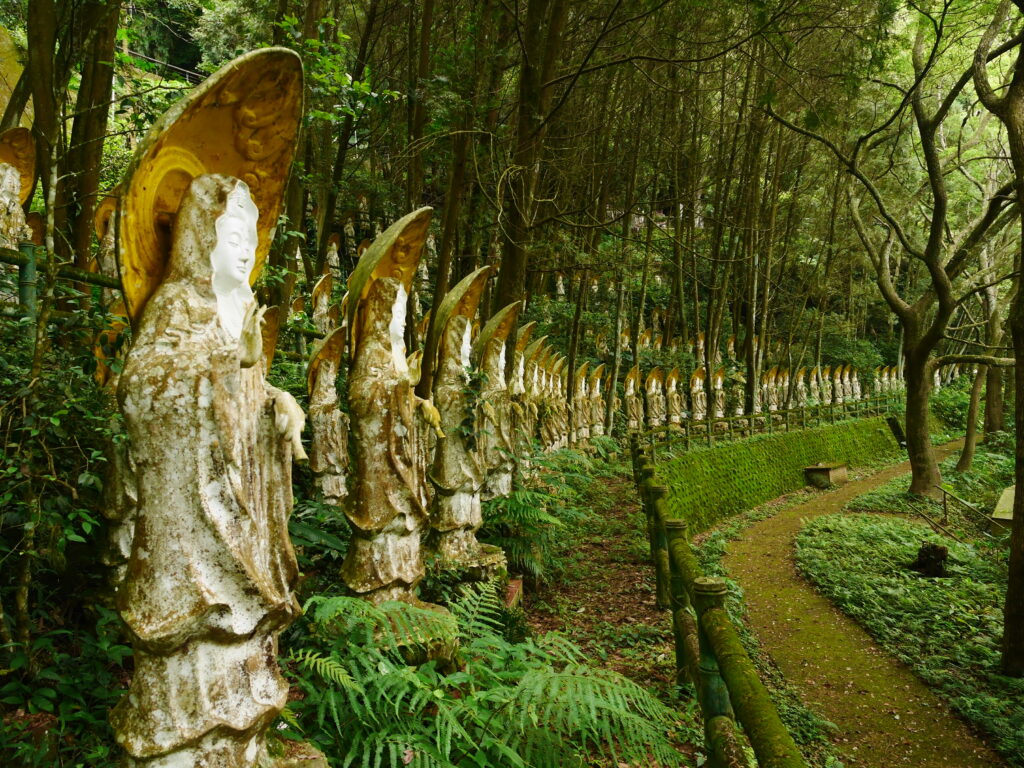
Now here’s the thing. The Lion Head Historic Trail passes by several temples and small shrines, so seeing statues of gods and goddesses is to be expected, in fact, I passed by several of them on the way. However, those are all in close proximity to the temples and shrines, and they are in much better conditions than the ones out in the forest.
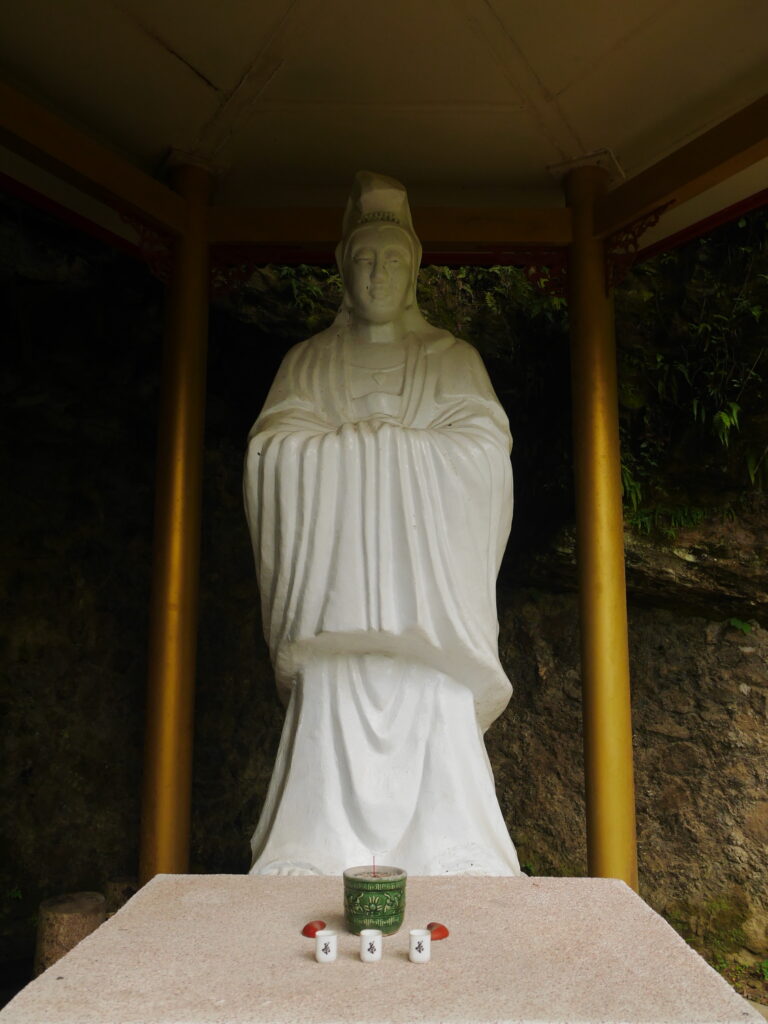
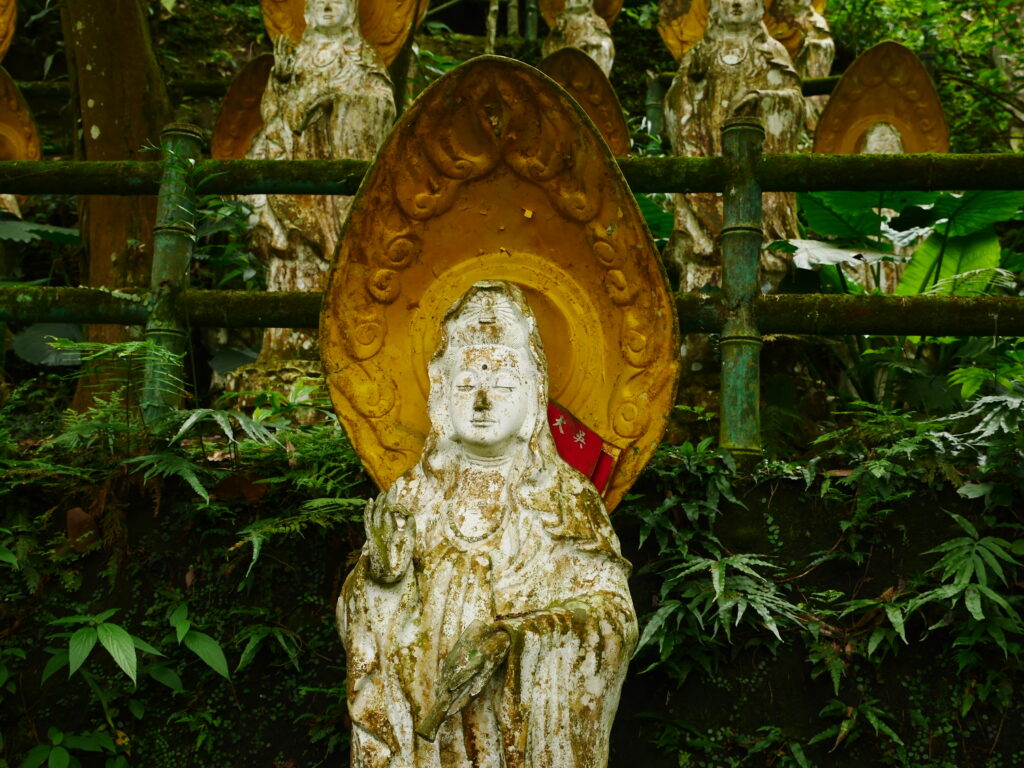
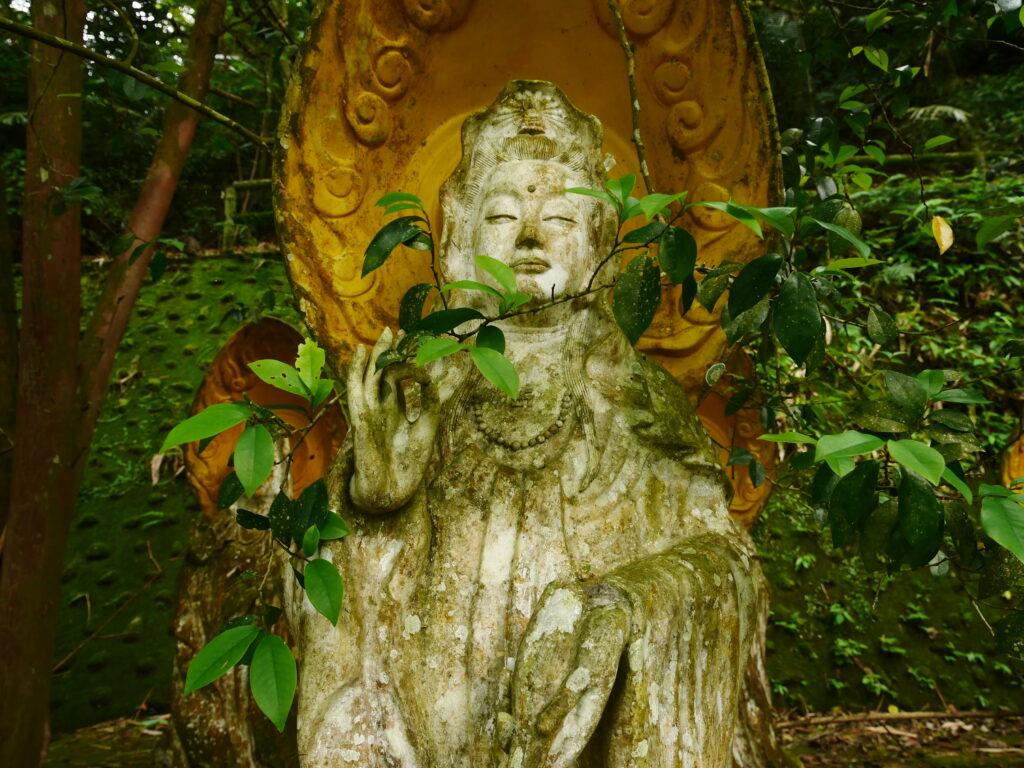
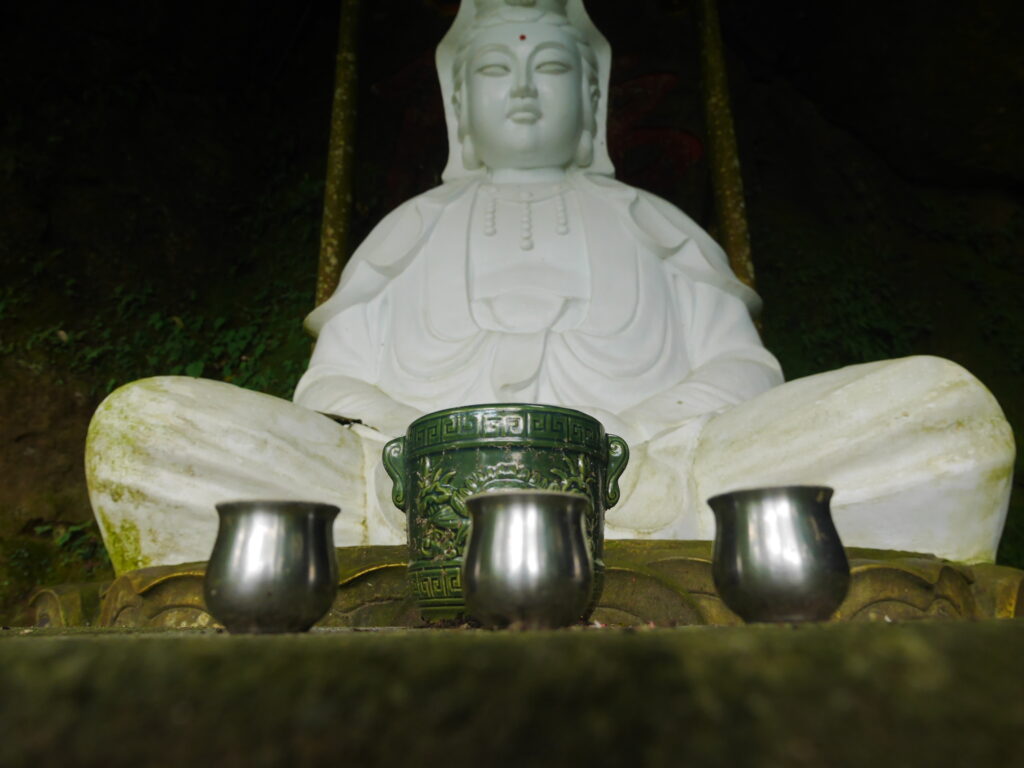
Comparison of the dilapidated Guanyins and the normal statues
The fact that all these Guanyin statues have seemingly been abandoned out in the jungle is really odd. There’s no explanation for why they are there, which of the temples they belong to, or why they have been left to rot. Granted, some of the shrines along this part of the trail show signs of deterioration,´though nowhere near as bad as the Guanyin statues, so it’s not too strange that the ones out in the jungle are in a bad condition. However, that still doesn’t explain why they were put there in the first place, or, for that matter, why there are so many of them. A bonus curiosity is the fact that the normal statues are clean, even when the nearby shrines are not. Someone must have spent time polishing them up, but skipped the actual shrine.
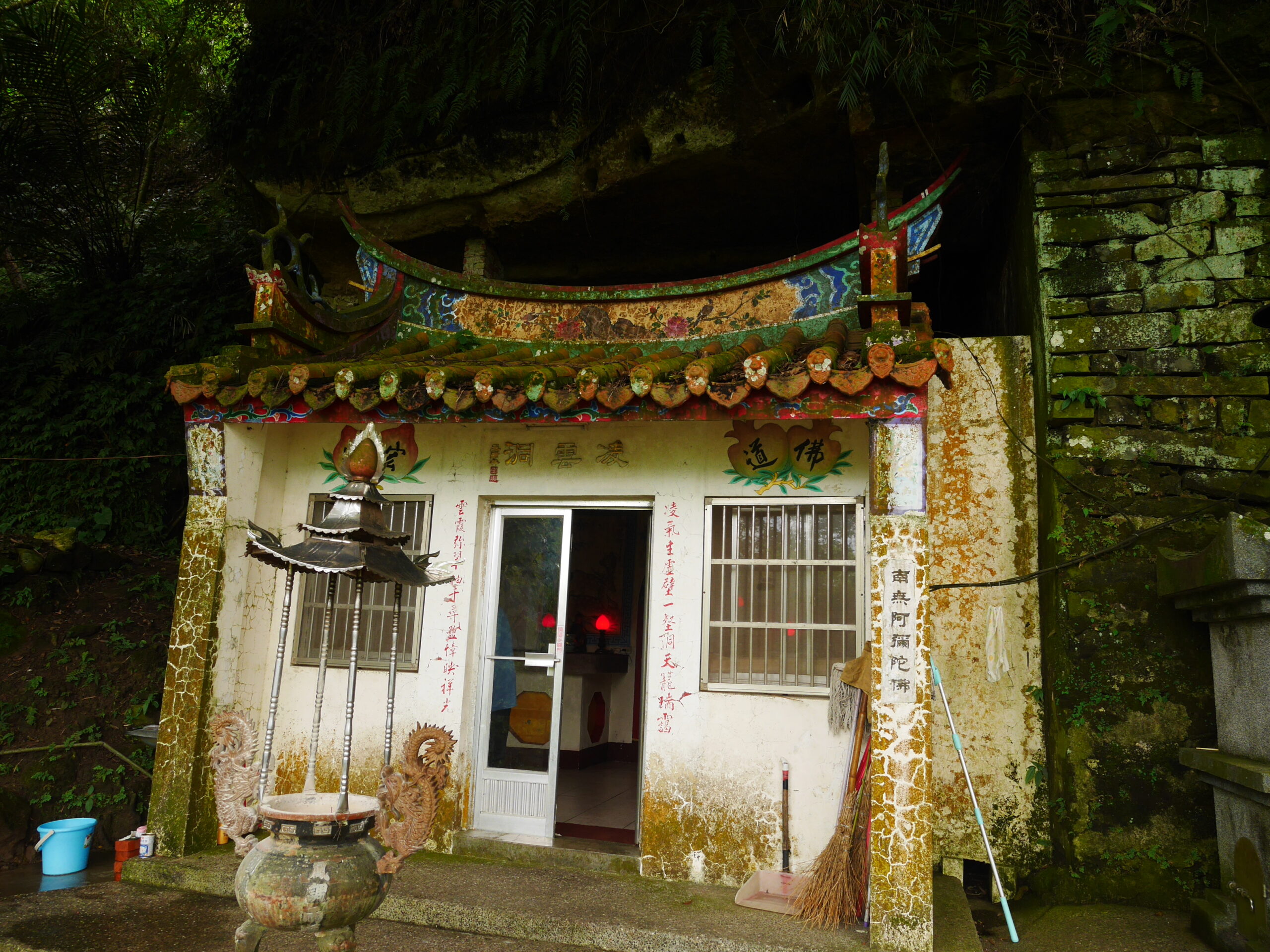
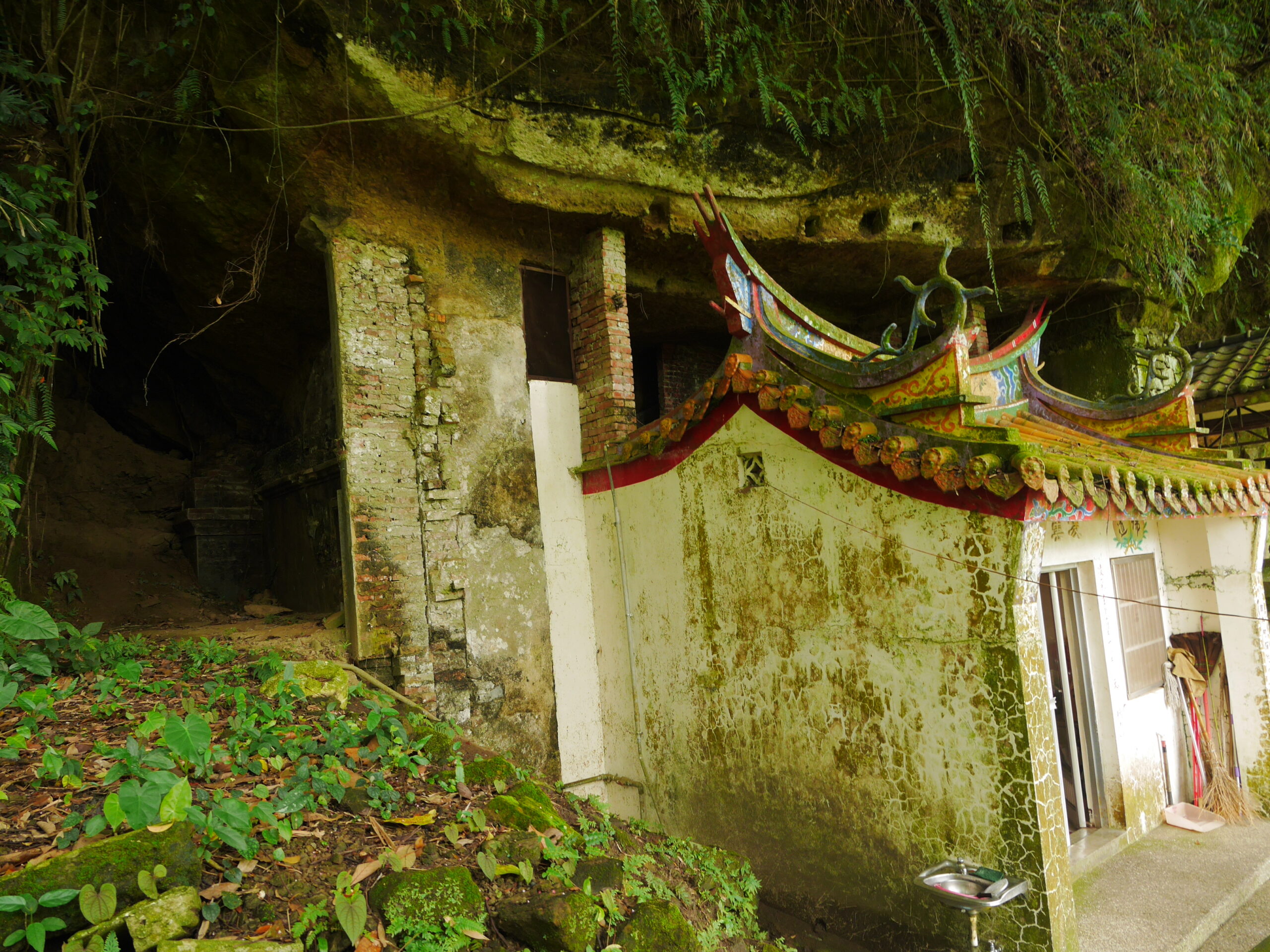
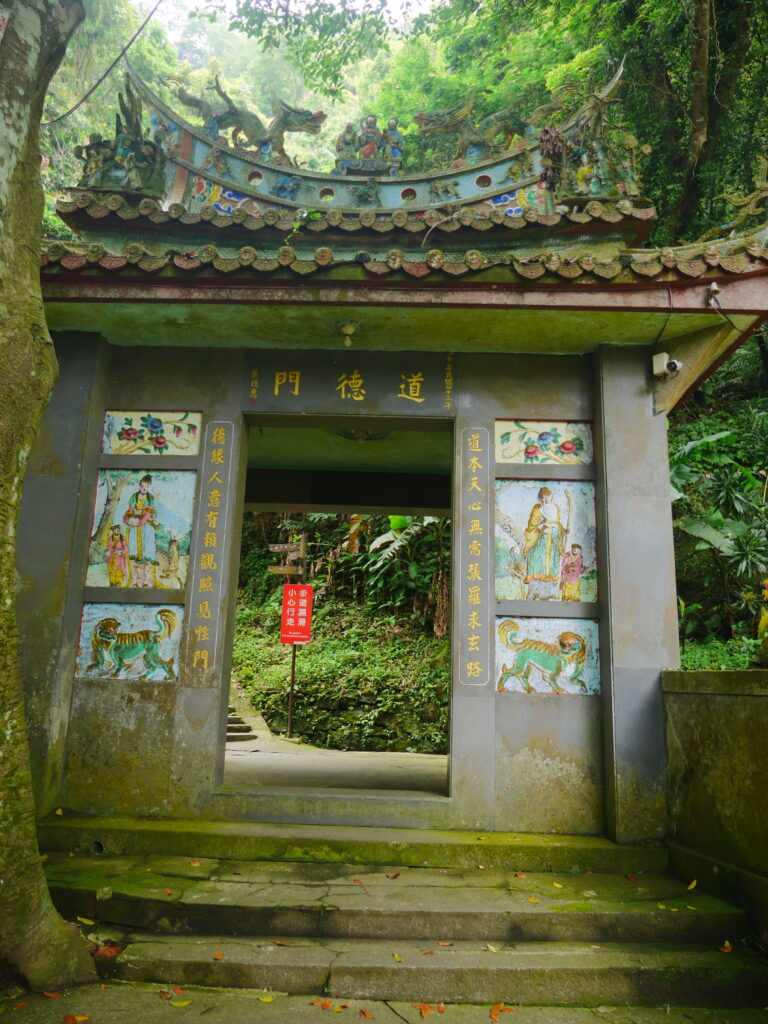
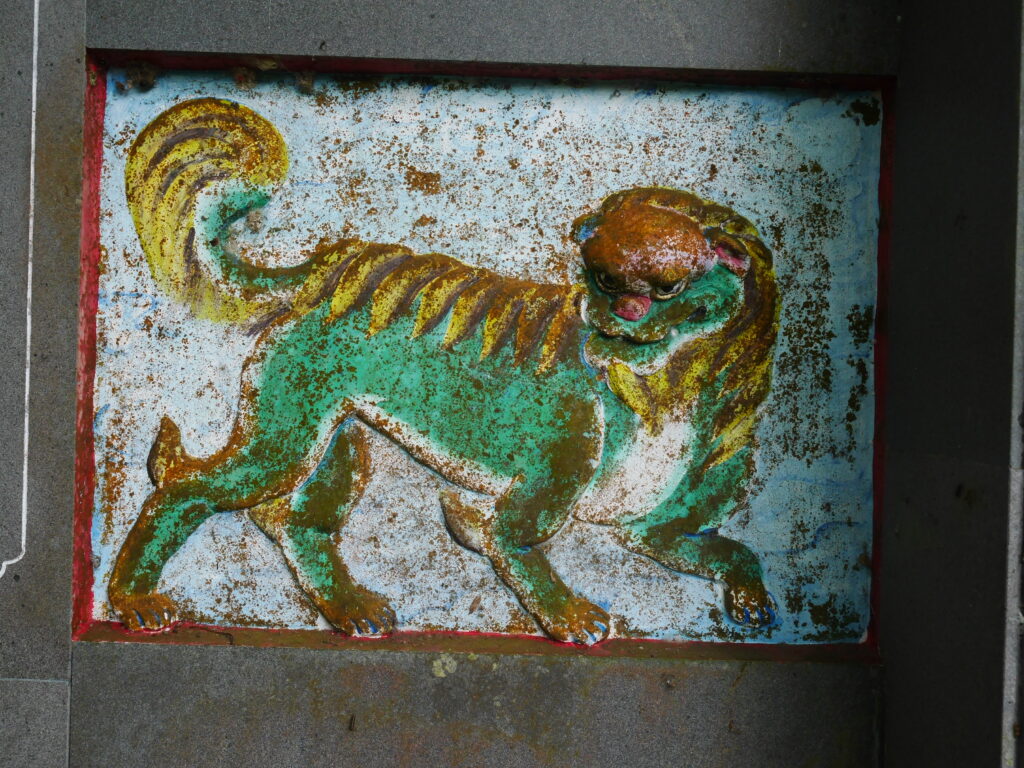
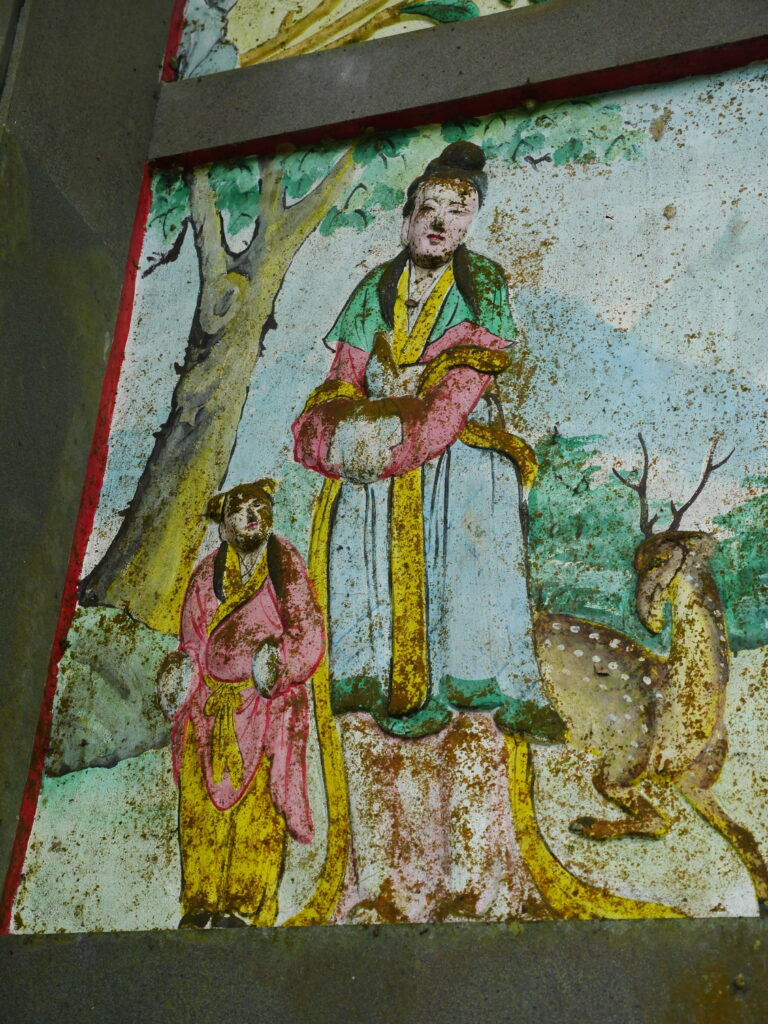

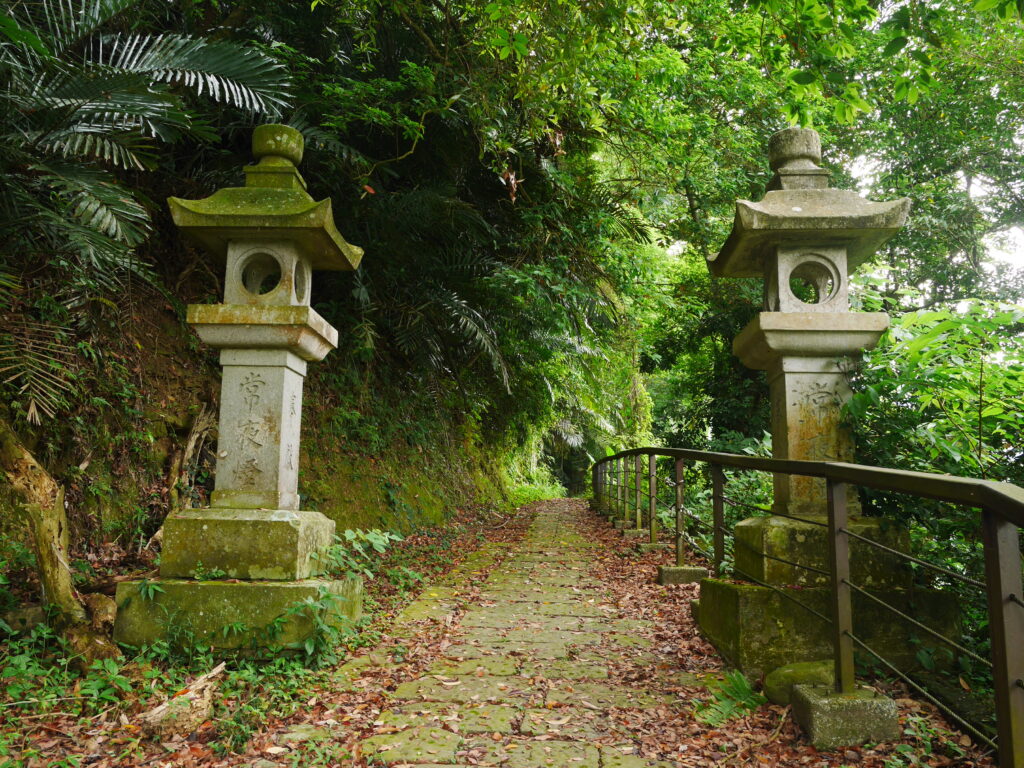
This gate is the grimiest thing in the area, but still not as bad as the Guanyin statues
My best guess is that these statues are connected to one of the temples in some way, but exactly what that connection is, remains unclear. It’s as if someone had them commissioned to be placed there for some unknown purpose, and then forgot about them. Now they are left in there, visible from the trail, completely disused. The Lion Head Historic trail itself is pleasant (especially if you like temples) though unchallenging, so coming across a bunch of mysterious statues that beg to be explored, significantly increases the adventure factor. In my opinion, the northern two-thirds of the trail are really only interesting if you’re heavily into (well maintained) temples. However, if you’re like me and find this kind of thing fascinating, it’s well worth it to explore the southern end of the trail, even if you’re not into hiking.
Before I end this post I have a couple of bonus pictures. You see, the reason I went to Lion Head Mountain in the first place is that I had noticed some abandoned houses nearby the southern trail head, and wanted to check them out. It turned out most of them had been fenced in by the local government so I couldn’t do much exploration, and decided to hike the trail instead. This ended up being a good decision because it enabled me to discover the statues. Nonetheless, I did get a couple of shots of those houses, here they are:
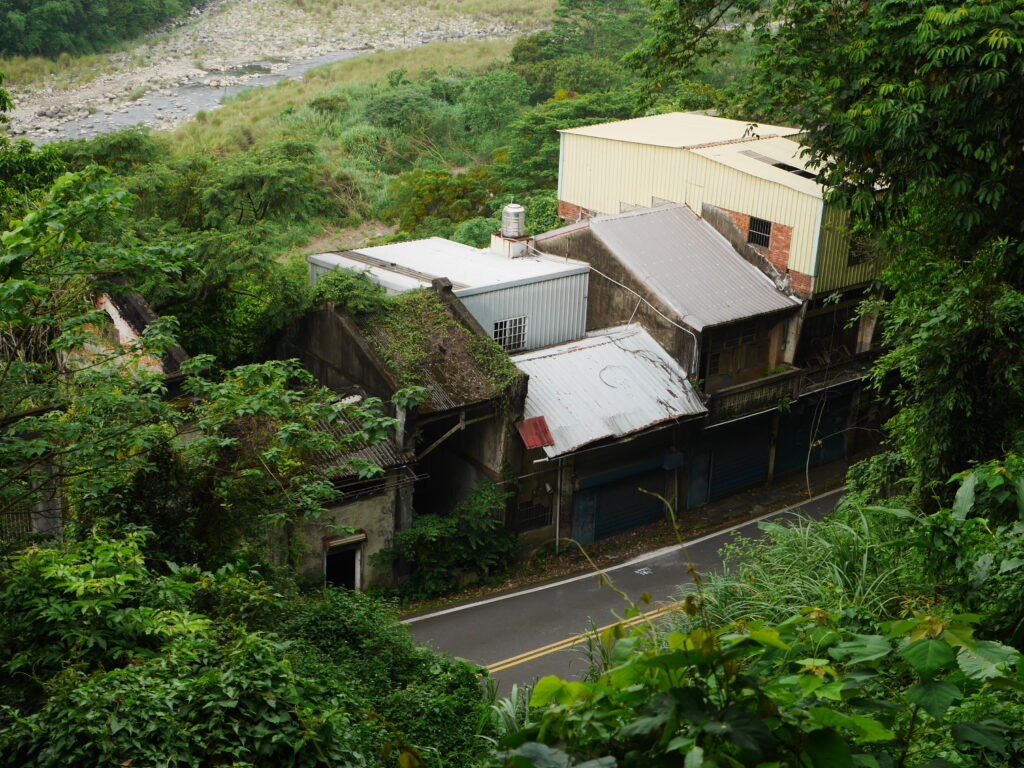
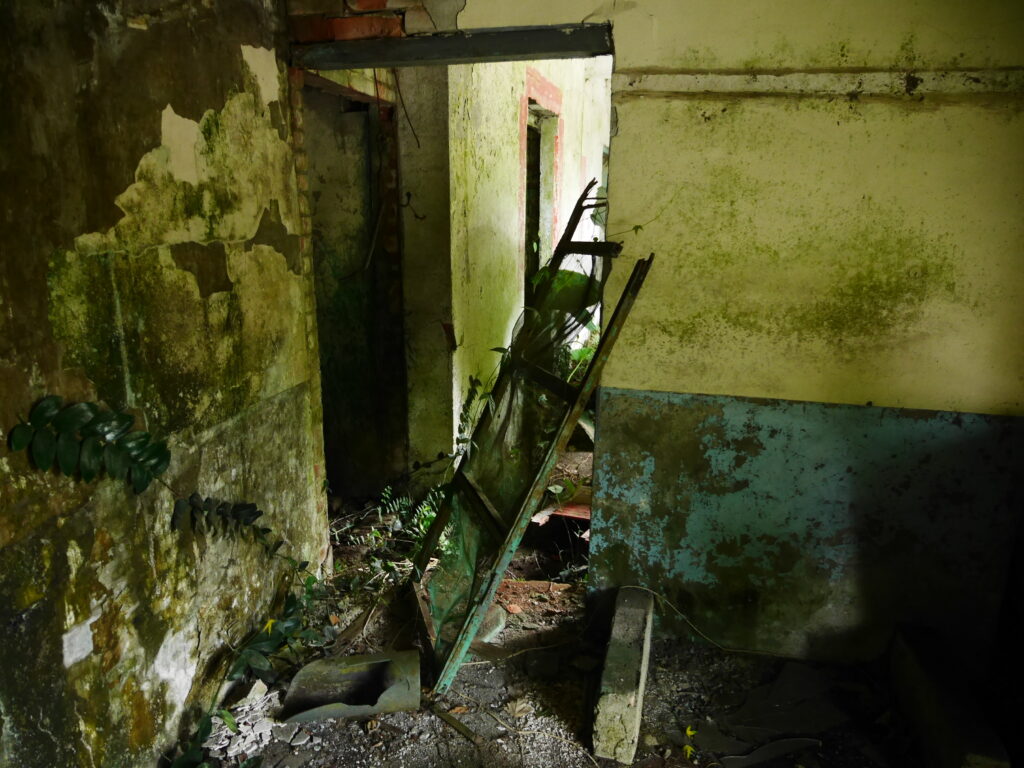
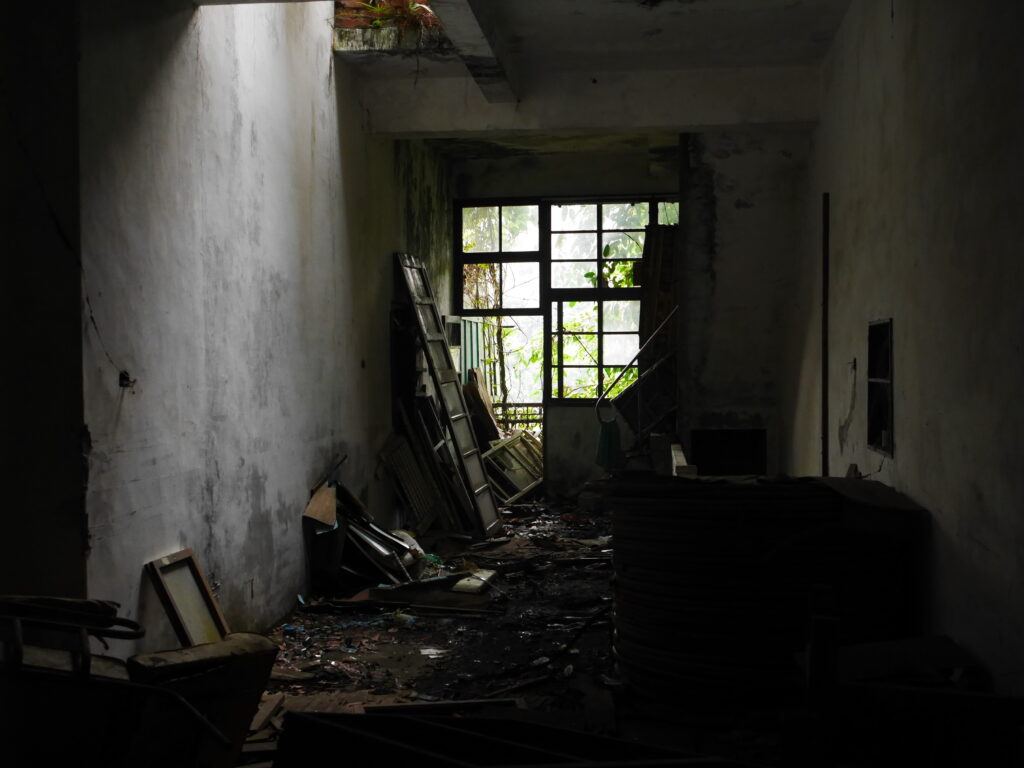
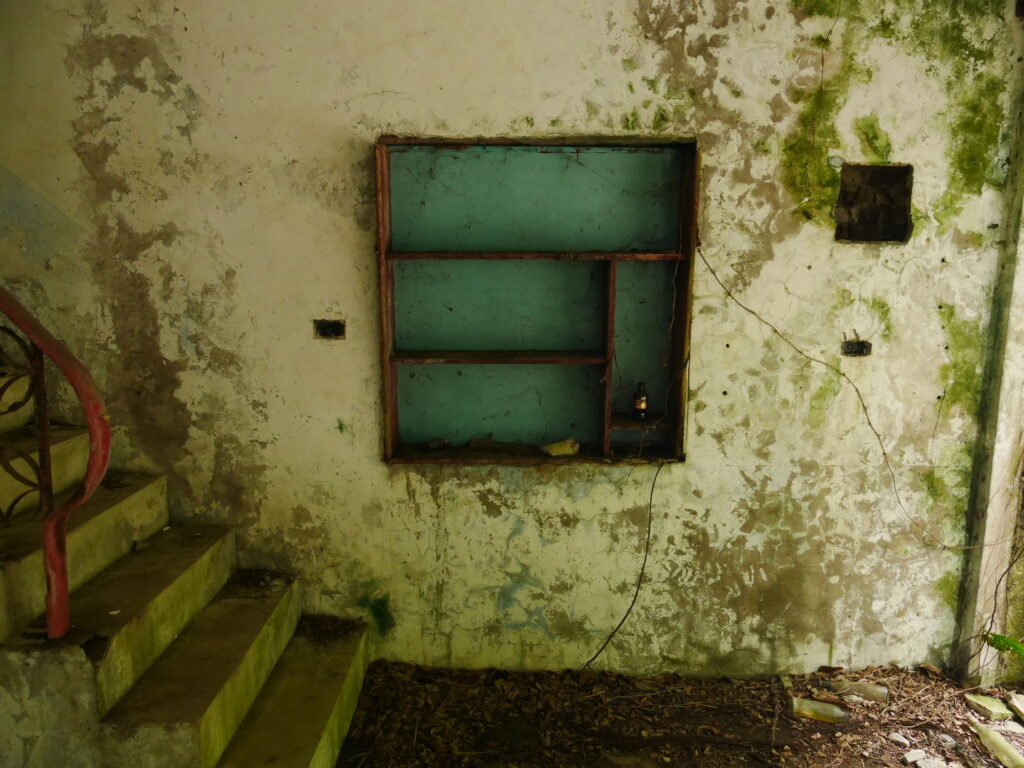
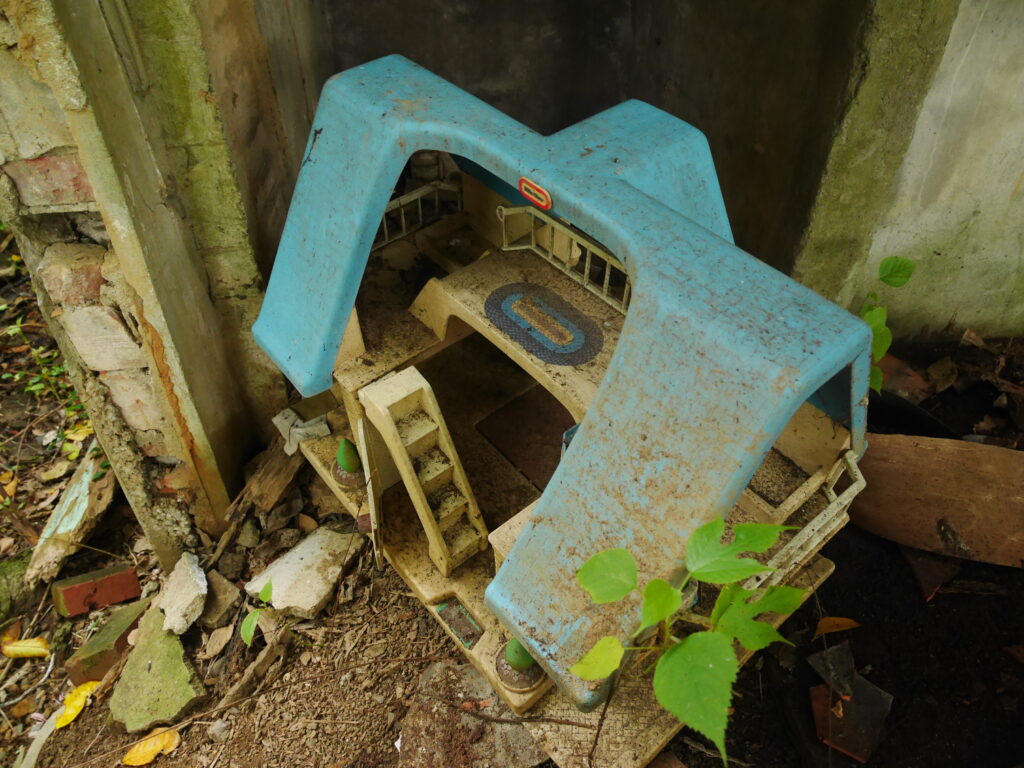
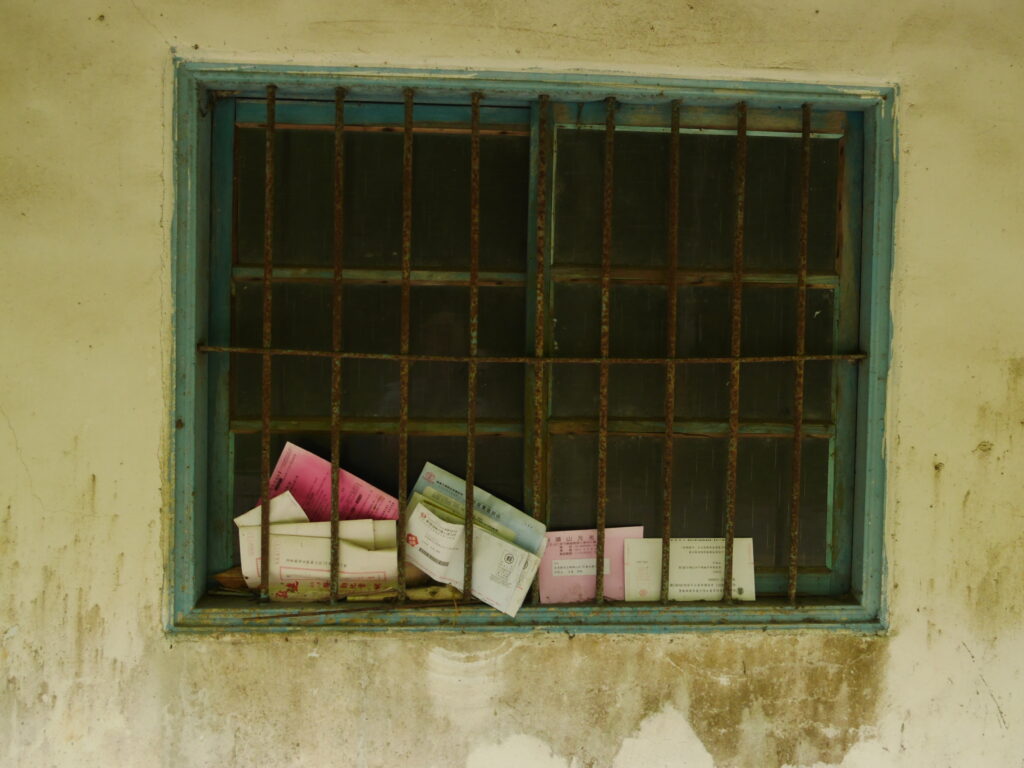
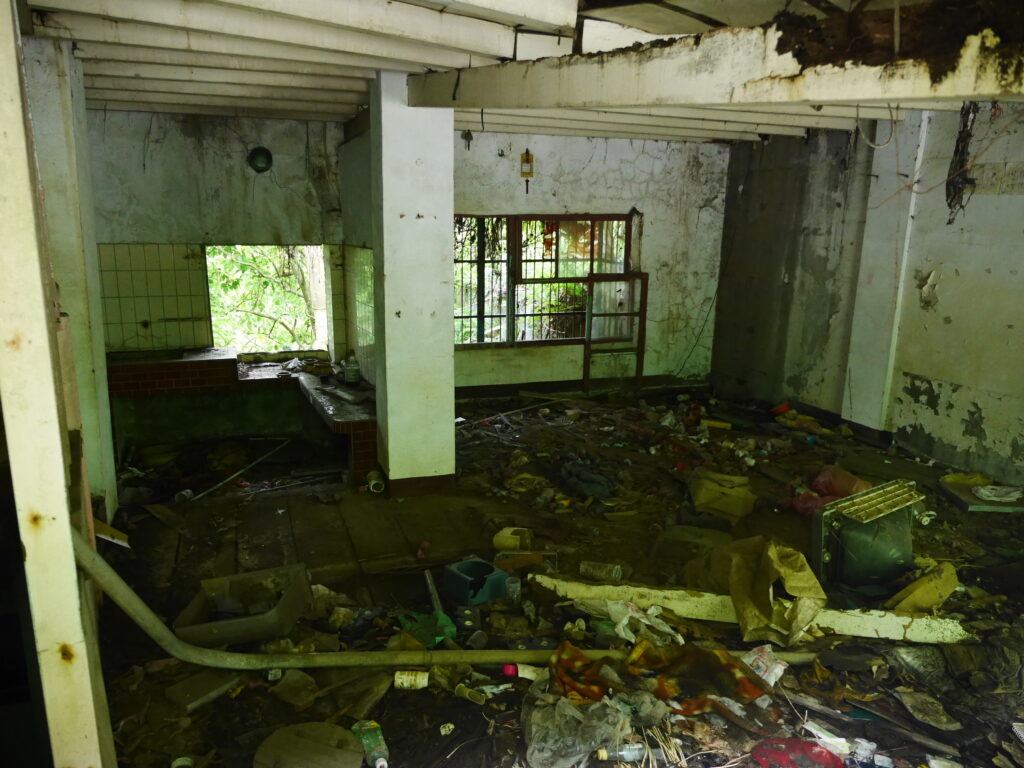
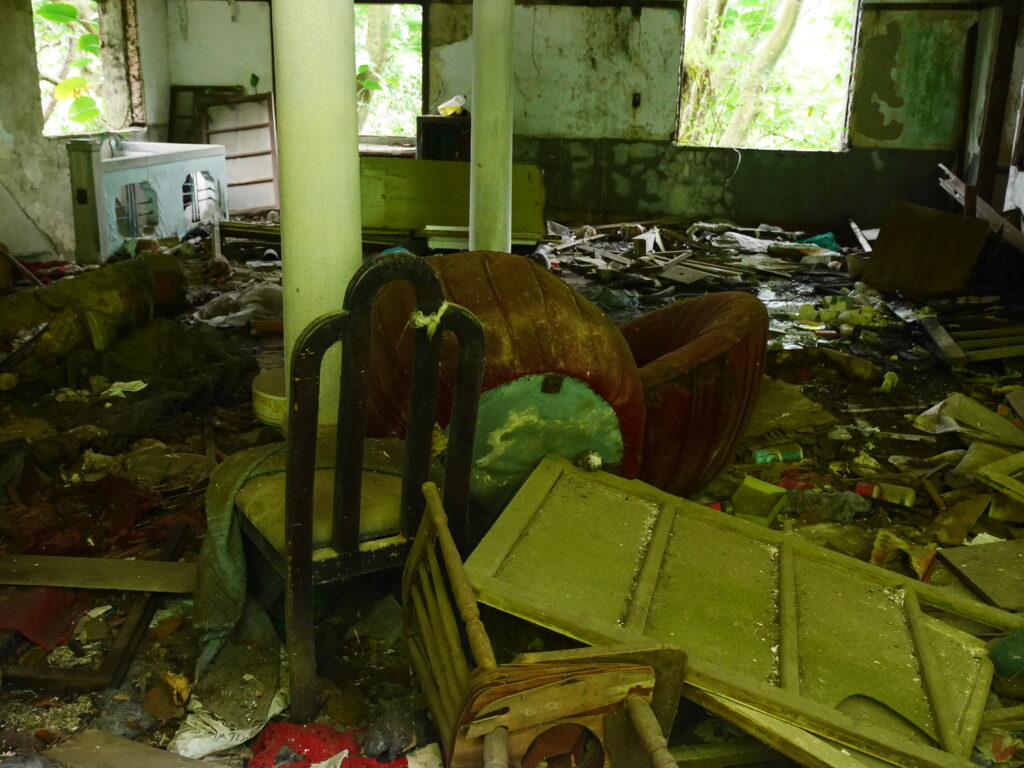
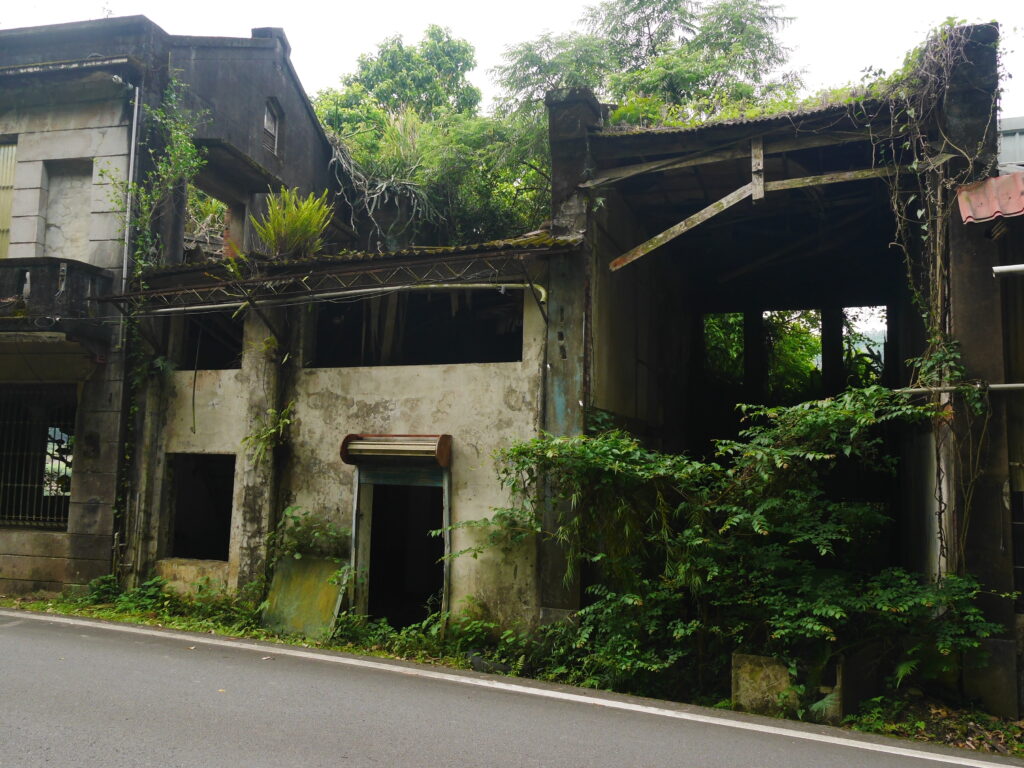
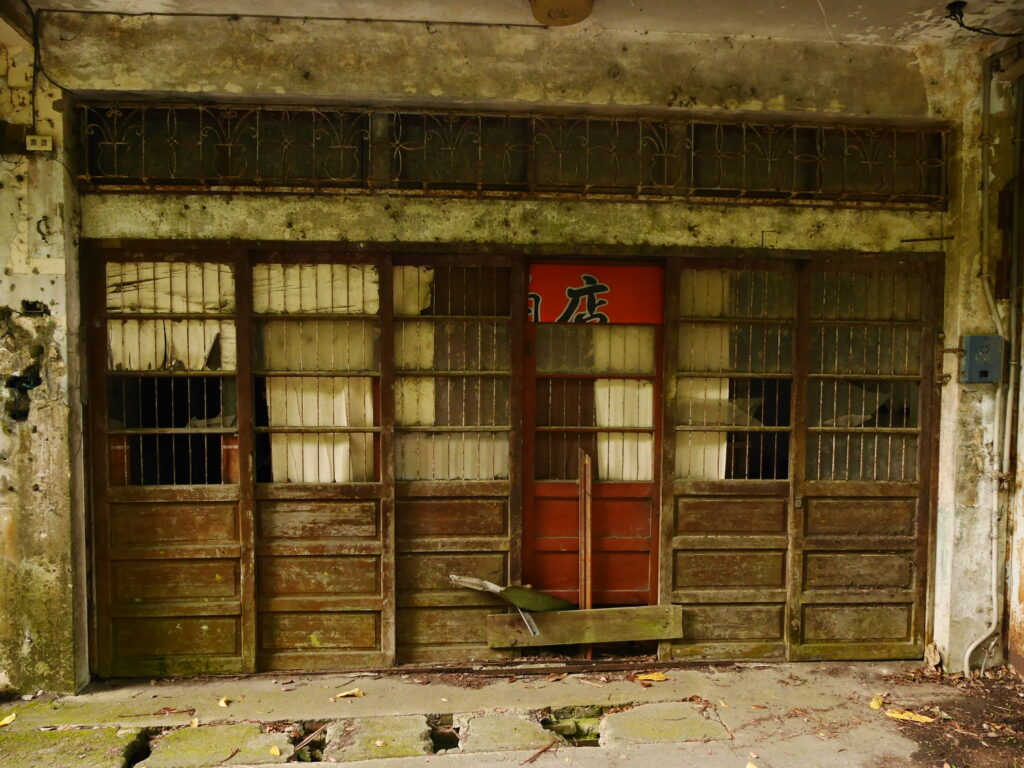
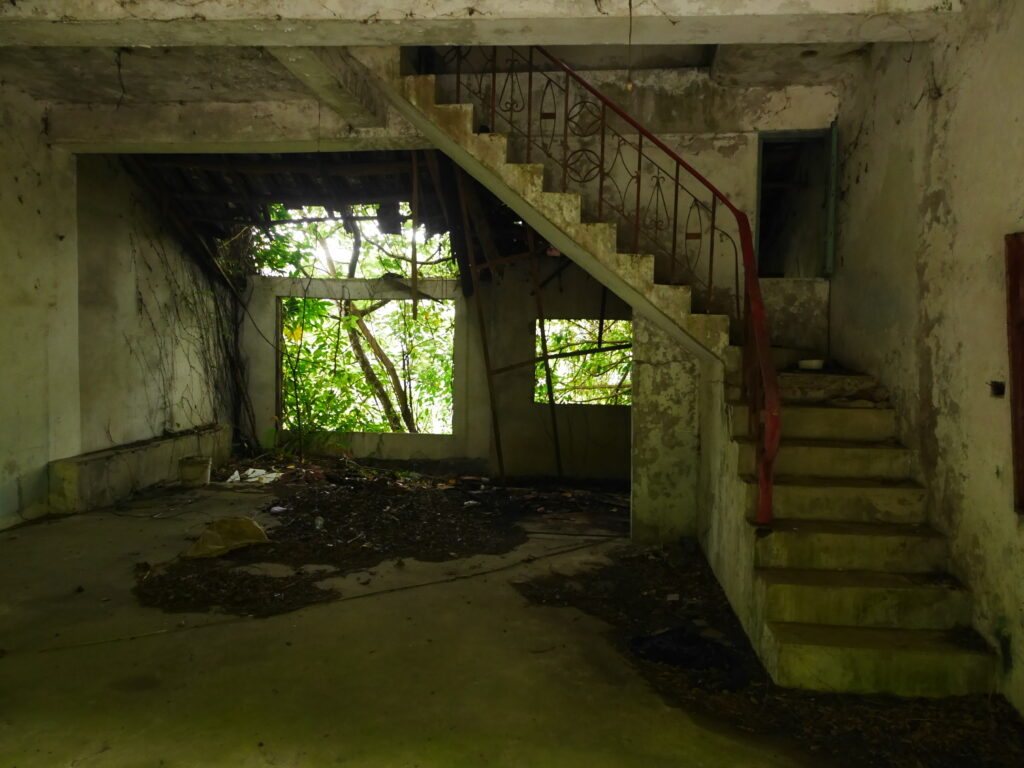
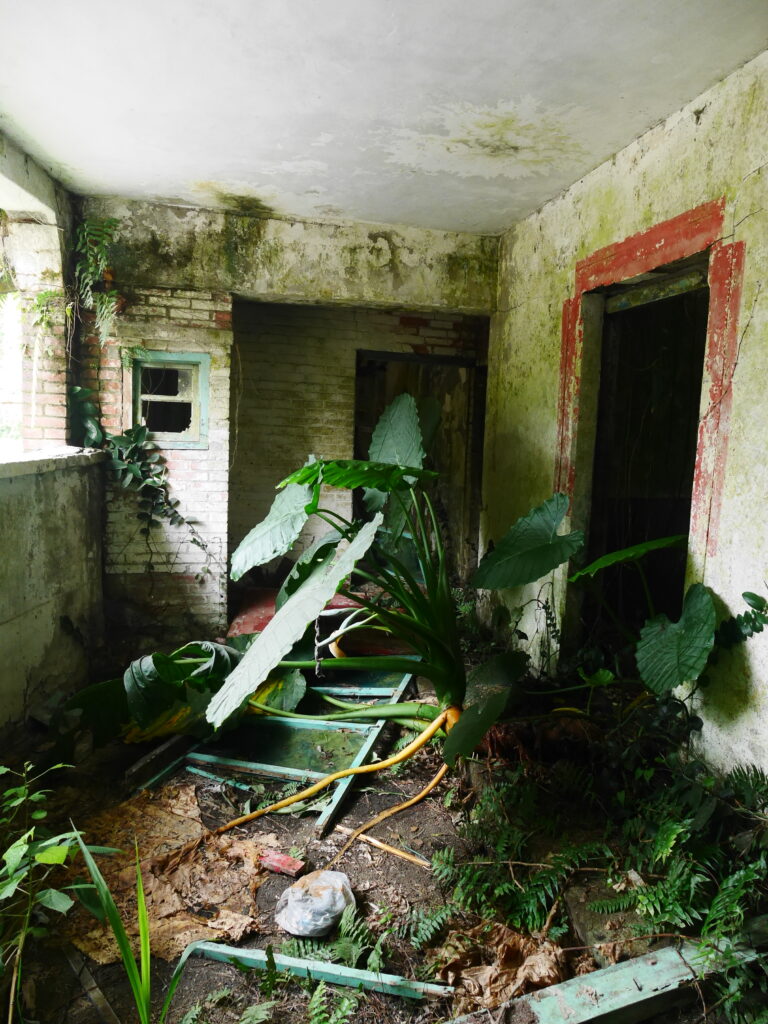
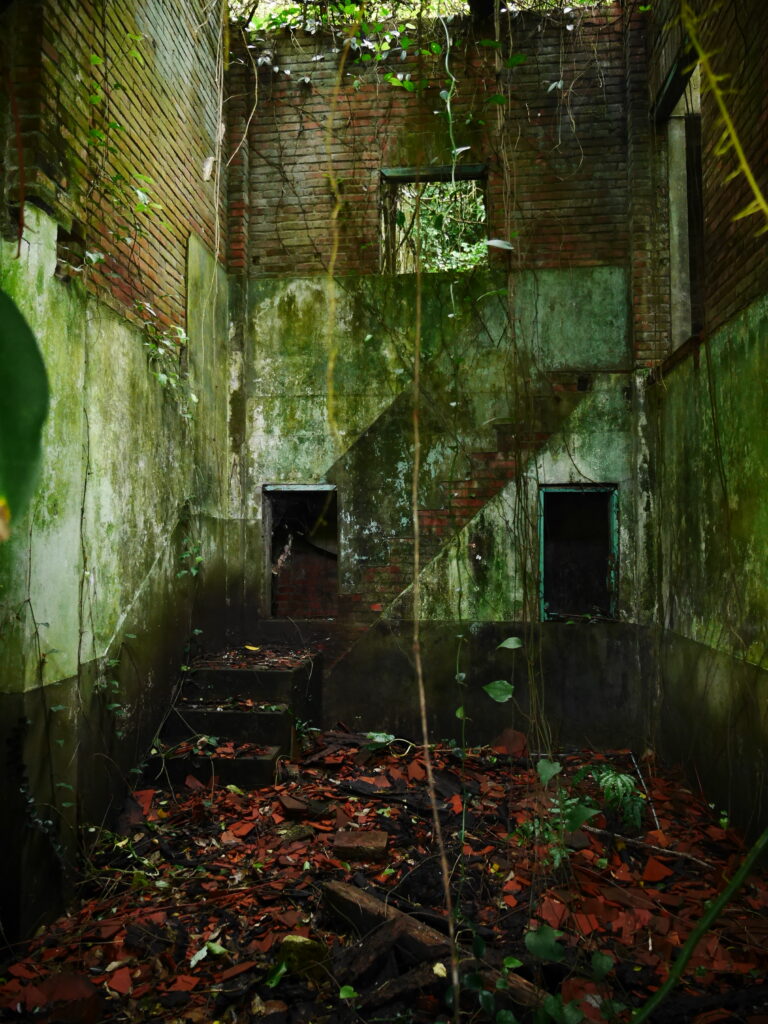
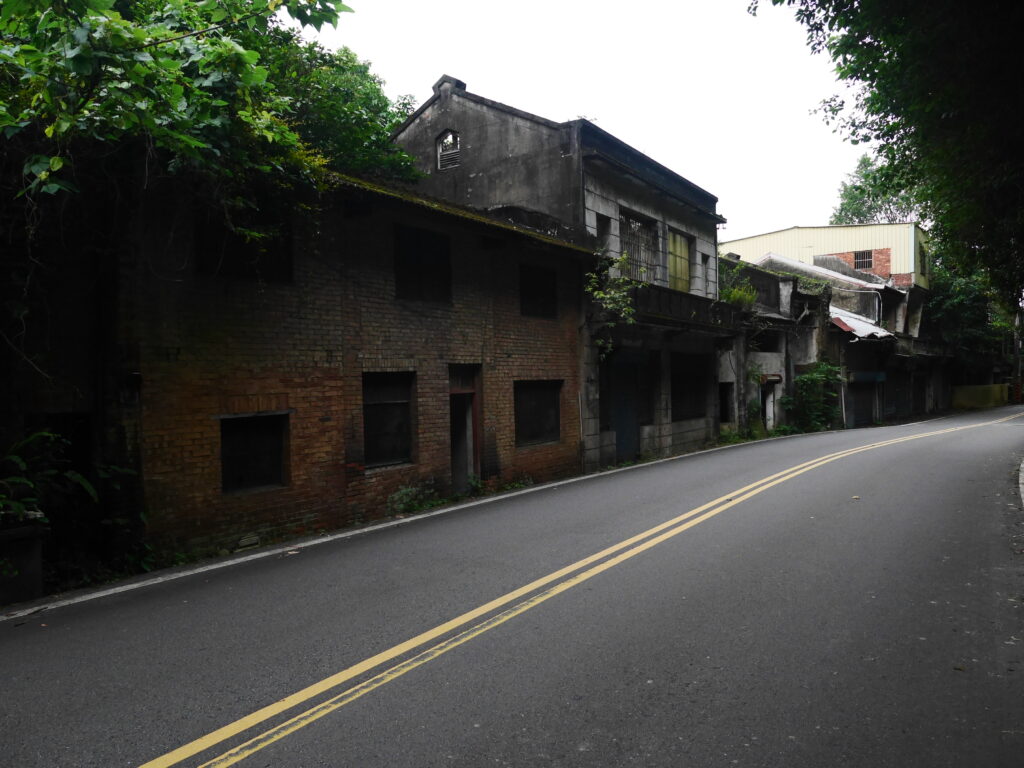
Abandoned village by the southern trail head
Leave a Reply